- We are Open Mon - Fri 9:00am -17:00pm
- e-mail us info@windekfisheries.com
- Our Address 19 Redemption way, Trans Amadi Port-Harcourt
Blog
- Home
- Blog
Categories
Recent Articles
Calendar
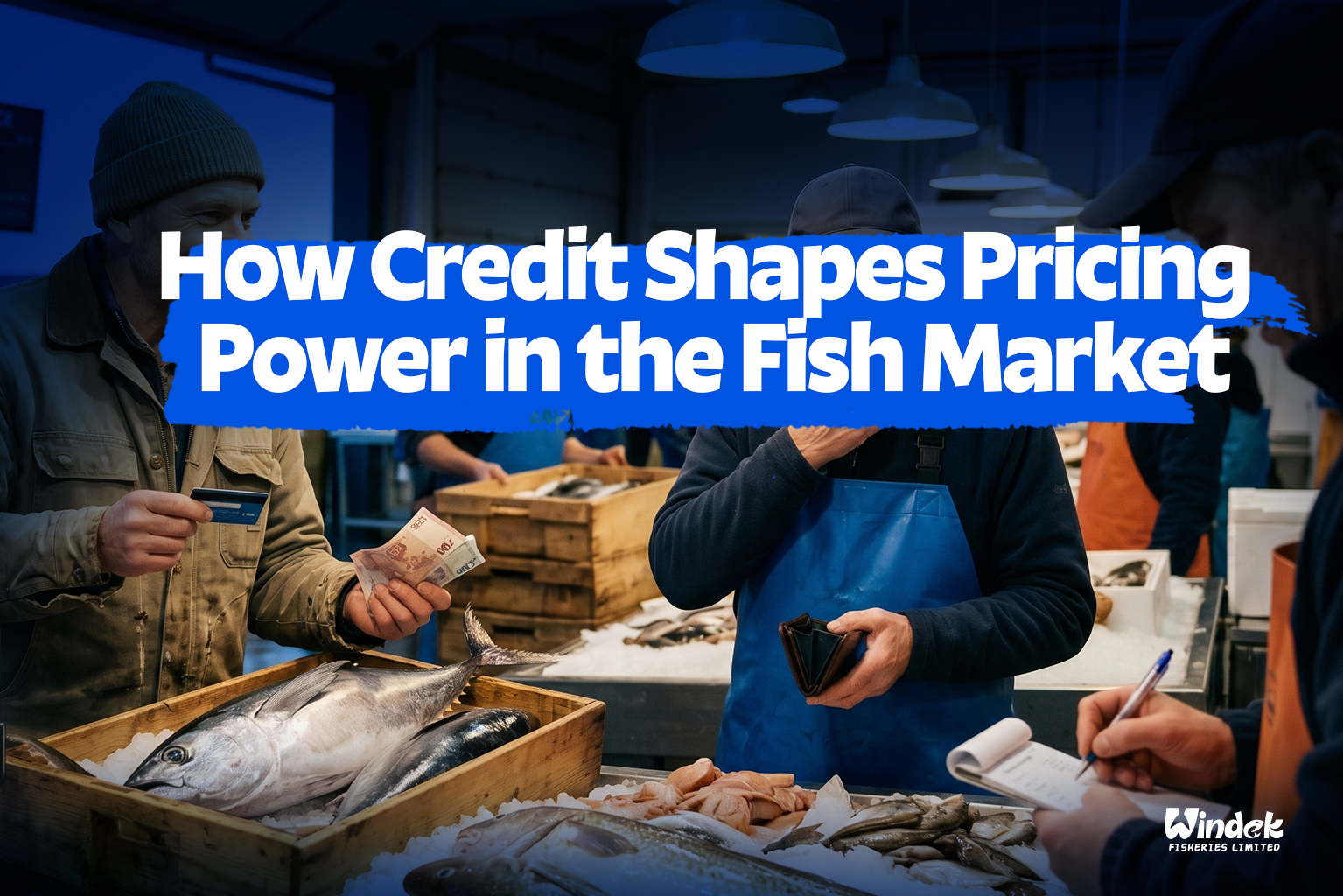
How Credit Shapes Pricing Power in the Fish Market
- windekfisheries
- No Comments
How Credit Shapes Pricing Power in the Fish Market Most people believe pricing power comes from one thing: Buying in large volumes. And while volume certainly helps, it is not the only factor that determines who gets the best prices in the fish market. Often, the real advantage comes from something less obvious: Access to credit. The ability to act quickly when opportunities appear can have a significant impact on profitability. In many cases, credit provides that advantage. Understanding Pricing Power Pricing power is the ability to purchase stock at favourable prices and maintain healthy margins when selling. Many traders assume pricing power comes from: Business size Purchasing volume Supplier relationships While these factors matter, they often depend on one critical capability: The ability to buy when market conditions are favourable. Why Timing Matters in Fish Trading Nigeria’s seafood market is highly dynamic. Prices can change due to: Supply fluctuations Import schedules Exchange rate movements Seasonal demand When prices temporarily drop, buyers have a window of opportunity. The challenge is that opportunities rarely wait for cash to become available. The Advantage of Credit Credit gives businesses flexibility. Instead of waiting for cash to accumulate, businesses can: Secure inventory immediately Lock in favourable pricing Increase purchasing capacity Position ahead of future demand This flexibility often translates directly into stronger margins. A Practical Example Imagine two fish traders. Both recognize that market prices have fallen. Both expect prices to increase within the next few weeks. The first trader has access to structured credit. The second trader must wait until sufficient cash is available. The first trader buys immediately. The second trader waits. When prices rise, the difference becomes clear. Both saw the same opportunity. Only one was positioned to act. Credit Creates Negotiating Power Suppliers value certainty. Buyers who can commit quickly often have greater leverage during negotiations. Credit helps businesses: Respond faster to supply opportunities Purchase larger quantities when needed Secure stock before competitors Reduce delays in decision-making This can strengthen negotiating positions and improve overall purchasing outcomes. The Importance of Structured Credit Not all credit creates value. Poorly managed credit can increase pressure and reduce profitability. The key is structure. Effective credit should align with: Inventory turnover Sales cycles Cash flow patterns When properly managed, credit becomes a growth tool rather than a financial burden. Why This Matters for Nigeria’s Seafood Industry The seafood industry operates on timing. Businesses that can move quickly often gain advantages that are unavailable to slower competitors. Organizations such as the International Finance Corporation have highlighted the importance of access to finance in improving supply chain efficiency and business growth. In practical terms, access to credit often determines whether businesses can capitalize on market opportunities when they appear. Conclusion Pricing power is not simply about having more money. It is about having the flexibility to act when opportunities arise. Credit does not just help businesses buy stock. It helps them buy at the right time. And in fish trading, timing often determines profitability. Internal Links Home: https://windekfisheries.com/ Services: https://windekfisheries.com/services/ Products: https://windekfisheries.com/products/ External References International Finance Corporation – https://www.ifc.org Food and Agriculture Organization of the United Nations – https://www.fao.org
The Trust Gap: Why Suppliers Hesitate Before Extending Credit
- windekfisheries
- No Comments
A supplier once said something very direct: “Selling fish is easy. Getting paid is the hard part.” That statement explains a major challenge in the seafood business. Many buyers believe access to credit depends mostly on volume or relationship history. But suppliers often look at something deeper: Can this buyer be trusted when pressure shows up? In fish trading, extending credit is not simply about moving stock. It is about managing risk. Why Suppliers Become Careful With Credit In fast-moving markets like seafood distribution, cash flow timing matters. When payments are delayed: Restocking becomes difficult Operational planning becomes unstable Supplier liquidity weakens One delayed payment can create pressure across the supply chain. This is why suppliers evaluate more than purchasing power. They evaluate payment behavior. What Suppliers Actually Look For Many buyers assume credit decisions are based on: Business size Volume purchased Years in the market While those factors matter, suppliers also pay close attention to consistency and reliability. Key Signals Suppliers Watch Communication during difficult periods Respect for agreed payment timelines Transparency around delays or challenges Overall predictability of the buyer In many cases, trust is built through repeated small actions, not large transactions. The Hidden Cost of Weak Trust When supplier confidence reduces, the effects are gradual but serious: Credit limits become smaller Access to stock becomes restricted Priority during shortages decreases Negotiation flexibility disappears The business may continue operating, but with more friction and less opportunity. Why Trust Matters More in Nigeria’s Seafood Market Nigeria’s seafood market is highly relationship-driven. Because pricing, supply availability, and import cycles can change quickly, suppliers often rely heavily on trust when deciding: Who receives flexible payment terms Who gets stock priority Who receives long-term support This makes trust a practical business asset, not just a personal quality. How Strong Buyers Build Supplier Confidence Experienced buyers understand that credit access is earned gradually. They build trust by: Maintaining consistent communication Managing expectations early Structuring agreements clearly Protecting payment credibility over time Organizations like the International Finance Corporation emphasize that predictable financial behavior improves supply chain stability and long-term business relationships. A Practical Way to Think About Credit Suppliers do not extend credit simply because buyers need it. They extend credit because they believe repayment behavior is reliable. That distinction changes everything. Conclusion In fish trading, access to credit is rarely only a financial decision. It is a confidence decision. The businesses that maintain strong supplier relationships are not just buying and selling well. They are building trust strong enough to support long-term growth. Internal Links Home: https://windekfisheries.com/ Services: https://windekfisheries.com/services/ Products: https://windekfisheries.com/products/ External Authority References International Finance Corporation – https://www.ifc.org Food and Agriculture Organization of the United Nations – https://www.fao.org
Why Reliable Frozen Fish Supply Matters for Nigeria’s Food Security
- windekfisheries
- No Comments
Frozen fish is more than just a product in Nigeria — it is a major source of affordable protein for millions of households and businesses. From local markets and restaurants to hotels and food processors, reliable access to frozen fish plays a critical role in the country’s food system. However, inconsistent supply chains, weak cold storage infrastructure, and logistics challenges continue to affect availability across many parts of Nigeria. At Windek Fisheries, we believe that strengthening frozen fish distribution is essential to improving food security and supporting business growth nationwide. The Growing Demand for Frozen Fish in Nigeria Nigeria’s population continues to grow rapidly, increasing the demand for affordable protein sources. Frozen fish remains one of the most accessible options because it is: Widely consumed across households More affordable than many other protein sources Essential for restaurants and food businesses According to the Food and Agriculture Organization (FAO), improving food supply systems is key to ensuring long-term food security in developing economies. Challenges Affecting Frozen Fish Supply in Nigeria Despite high demand, several challenges continue to impact frozen fish distribution across Nigeria: Weak Cold Chain Infrastructure Without reliable cold storage and transportation systems, frozen fish can lose quality before reaching customers. Supply Chain Disruptions Inconsistent sourcing and poor logistics planning often lead to shortages in the market. Rising Operational Costs Transportation, storage, and energy costs continue to affect distribution efficiency. Limited Trust Within the Supply Chain Suppliers and distributors sometimes struggle with payment delays and unreliable partnerships. These issues contribute directly to fluctuations in frozen fish availability and pricing. How Windek Fisheries Supports Reliable Frozen Fish Supply At Windek Fisheries, we focus on building systems that improve reliability across the frozen fish supply chain. Strong Distribution Network We maintain structured sourcing and distribution processes to ensure frozen fish remains available for businesses and consumers. Learn more about our logistics and distribution solutions on the Services page. Cold Chain Logistics and Storage Maintaining proper temperature control is essential for preserving product quality. Our operations prioritize: Proper cold storage systems Controlled transportation Reduced spoilage and waste Long-Term Supplier Partnerships We believe strong supplier relationships create more stable supply systems. By operating transparently and maintaining reliable partnerships, Windek Fisheries helps improve consistency across the frozen fish market. Read more about our mission and operations on the About Us page. Why Reliable Frozen Fish Supply Improves Food Security A stable frozen fish supply chain benefits everyone: Households gain access to affordable protein Businesses experience fewer supply disruptions Retailers can plan inventory more effectively Food waste is reduced through proper cold chain systems According to the World Bank, stronger food logistics systems are critical for improving food availability and reducing waste. The Future of Frozen Fish Distribution in Nigeria As demand for frozen protein continues to rise, Nigeria will require stronger cold chain systems, improved logistics infrastructure, and more reliable supplier partnerships. Windek Fisheries is committed to contributing to this growth by: Strengthening distribution efficiency Expanding reliable supply systems Supporting food businesses nationwide Improving cold chain logistics standards For industry updates and insights, visit our Blog. Partner With Windek Fisheries If you are looking for a reliable frozen fish distributor in Nigeria, Windek Fisheries is ready to support your business with dependable supply and professional logistics solutions. Website: https://www.windekfisheries.comPhone: 08066152861 For inquiries, visit our Contact page.For opportunities to join our team, visit Careers
The Cash Flow Illusion: Why Profit on Paper Doesn’t Mean You Can Pay Your Suppliers
- windekfisheries
- No Comments
Many fish businesses appear profitable on paper. Sales are strong. Margins look healthy. Yet, when it’s time to pay suppliers, cash is not available. This is one of the most common and misunderstood challenges in fish trading. Profit vs Cash Flow: Understanding the Difference Profit represents the difference between revenue and expenses. Cash flow reflects how money actually moves in and out of the business. They are not the same. A business can be profitable but still experience cash shortages. Where Cash Gets Stuck In fish trading, cash is often tied up in: Unsold inventory Customer credit Operating expenses This creates a delay between making a sale and receiving actual cash. The Impact on Operations When cash is not available: Suppliers cannot be paid on time Stock cannot be replenished quickly Market opportunities are missed This slows down business growth. Why It Matters in Nigeria’s Seafood Market The seafood market is fast-moving and timing-driven. Opportunities depend on: Supply availability Pricing changes Demand cycles Without liquidity, businesses cannot respond effectively. How to Improve Cash Flow To reduce pressure: Align purchases with real cash inflow Structure customer payments properly Monitor inventory turnover closely Use credit strategically, not casually Conclusion Sales and profit are important. But cash flow determines whether a business can operate effectively. Understanding this difference helps businesses remain stable and competitive.
The Trade-Off Between Paying Early and Using Credit in Fish Trading
- windekfisheries
- No Comments
In fish trading, one decision quietly affects profitability more than most people realize: Should you pay early or use credit? At first glance, the answer seems simple. Paying early feels safe.Using credit feels risky. But in reality, both approaches serve different purposes, and choosing the wrong one at the wrong time can limit growth or reduce margins. A Common Scenario in the Market Two buyers approach the same opportunity. One pays early, secures stock, and keeps the transaction simple. The other uses structured credit, keeps cash available, and buys more volume when needed. Weeks later, the market shifts. Prices move. Demand changes. The outcome between the two buyers is often very different. Not because one is smarter. But because they made different financial decisions. What Paying Early Actually Does Paying early is often associated with discipline and reliability. It offers several advantages: Builds stronger supplier trust Improves access to stock Simplifies transactions Reduces financial pressure In many cases, suppliers prefer buyers who pay early because it reduces uncertainty. When Paying Early Makes Sense When building or strengthening supplier relationships When securing priority during limited supply When minimizing financial risk is the goal Paying early creates stability. The Hidden Limitation of Paying Early Despite its benefits, paying early has a cost that is often overlooked. Once payment is made: Cash is no longer available Flexibility is reduced Opportunities may be missed For example: If prices drop after you’ve paid, you cannot easily buy more If demand increases, your ability to scale quickly is limited The cost is not visible immediately. But it shows up in missed timing advantages. What Using Credit Actually Does Credit allows you to operate differently. Instead of locking your cash, it gives you room to move. Benefits of Using Credit Keeps liquidity available Allows larger or more frequent purchases Aligns payment with actual sales cycles Improves responsiveness to market changes In a dynamic market like seafood, timing can significantly impact profitability. Credit enables you to act when opportunities arise. The Risk of Using Credit Incorrectly The biggest misconception is that credit itself is the risk. The real risk is unstructured credit. When credit lacks clear terms: Payment timelines become uncertain Supplier confidence weakens Future supply becomes unstable Organizations like the International Finance Corporation emphasize that structured financing systems improve business performance across supply chains. What Structured Credit Looks Like Defined repayment timelines Alignment with sales cycles Clear communication between buyer and supplier With structure, credit becomes predictable and manageable. Cash vs Credit: A Strategic Perspective The most successful fish traders do not rely on one method alone. They use both, depending on the situation. Use Cash When: You want to build trust quickly You need transaction simplicity Market conditions are uncertain Use Credit When: Timing is critical Opportunities require fast action You want to scale beyond available cash This approach creates balance between control and flexibility. A Simple Decision Framework Before deciding, ask: Is this a relationship decision or a market opportunity? Do I need liquidity or priority right now? What is likely to happen in the next few weeks? These questions help align your payment strategy with market conditions. Why This Matters in Nigeria’s Seafood Market Nigeria’s seafood market is influenced by: Import cycles Exchange rate fluctuations Supply availability Demand surges In such an environment, timing plays a major role. Relying only on cash can limit growth. Relying only on credit can increase risk. The advantage comes from knowing when to use each. A Practical Way to Think About It Cash builds trust. Credit creates opportunity. Both are necessary for long-term success. Conclusion The question is not whether to pay early or use credit. The real question is: What does the situation require right now? Paying early strengthens relationships and reduces risk. Using credit, when structured properly, improves flexibility and positioning. The most successful businesses are not choosing one over the other. They are using both strategically. Internal Links Home: https://windekfisheries.com/ Services: https://windekfisheries.com/services/ Products: https://windekfisheries.com/products/ External Authority Reference International Finance Corporation – https://www.ifc.org
The Cost of Saying “I’ll Pay Later” Without a Clear Plan
- windekfisheries
- No Comments
“I’ll pay later.” It sounds simple. Flexible. Convenient. In many fish trading relationships, this phrase is common. It often reflects trust between buyers and suppliers. But over time, it can become one of the most expensive decisions a business makes. Not because credit is bad. But because credit without a clear plan creates hidden costs. Where It Begins In the early stages, everything works. Stock moves. Sales happen.There is mutual understanding. Payment is expected later, but: No exact timeline is defined No structure is agreed No alignment with actual sales cycles exists At this point, the arrangement feels easy. But the risk is already building. When “Later” Becomes a Problem As the business operates, small pressures begin to appear: Sales fluctuate Cash flow becomes uneven Expenses compete for available funds Without a defined payment plan, “later” becomes uncertain. And uncertainty is where problems begin. The Real Issue Is Not Credit It is important to be clear: Credit itself is not the problem. In fact, across global value chains, organizations like the International Finance Corporation highlight structured financing as a key driver of business growth. The real issue is unstructured credit. When there is no clarity: Payment timelines become unclear Supplier confidence reduces Future supply becomes unstable The Hidden Costs of Unstructured Credit These costs are rarely recorded as direct losses. Instead, they appear gradually: Payment delays create tension Suppliers reduce supply or become cautious Buying opportunities are missed Relationships weaken over time Nothing fails immediately. But efficiency drops and growth slows. The Ripple Effect on Your Business One unclear credit arrangement affects more than a single transaction. It impacts: Your ability to restock consistently Your credibility with suppliers Your negotiating power Your access to future credit In a market where timing is critical, these limitations reduce competitiveness. Why Structure Changes Everything When credit is structured properly, outcomes improve significantly. Structure introduces: Defined payment timelines Alignment with actual sales cycles Clear communication between both parties With these in place: Pressure reduces Planning improves Trust becomes predictable Credit becomes a system, not a source of stress. A Practical Way to Think About It Credit should not be based on assumption. It should be based on agreement. A simple principle: If you cannot define when you will pay,you will eventually struggle with how to pay. Why This Matters in Nigeria’s Seafood Market In Nigeria’s seafood market, where supply cycles, pricing, and demand can shift quickly, structured credit plays a critical role. It allows businesses to: Maintain steady supply Manage cash flow effectively Build long-term supplier relationships Without structure, even profitable businesses can experience instability. Conclusion “I’ll pay later” may sound harmless. But without a clear plan, it creates hidden costs that affect: Profitability Relationships Growth potential The businesses that succeed are not just those with access to credit. They are the ones that use credit with structure and discipline. Internal Links Home: https://windekfisheries.com/ Services: https://windekfisheries.com/services/ Products: https://windekfisheries.com/products/ External Authority Reference International Finance Corporation – https://www.ifc.org
Cash vs Credit: When Each One Actually Makes Sense in Fish Trading
- windekfisheries
- No Comments
A buyer once shared a simple rule. He only bought fish with cash. His reasoning was clear: no pressure, no debt, no complications. For a while, it worked. But then the market shifted. Prices dropped unexpectedly. Stock was available. Demand was building. It was the perfect opportunity to buy. But he didn’t have enough cash. So he waited. Another buyer stepped in, used structured credit, secured more volume, and bought ahead of the market. Two weeks later, prices increased. Same market. Same product. Different outcomes. The Real Question: Cash or Credit? In Nigeria’s fish market, the conversation is often simplified: Cash is safe Credit is risky But this way of thinking is incomplete. The real question is not which one is better. It is when each one makes sense. When Cash Makes Sense in Fish Trading Cash remains a powerful tool in the right situations. It works best when: Market prices are unstable or unclear You are testing a new supplier You want to minimize risk exposure You need flexibility with no repayment obligations Benefits of Using Cash Full control over transactions Faster buying and selling cycles No repayment pressure Reduced financial risk Cash helps you stay protected, especially in uncertain market conditions. Where Cash Becomes a Limitation Despite its advantages, cash has limits. There are moments when: Prices drop suddenly Supply becomes available in large volumes Demand is expected to rise If liquidity is not available at that exact time, opportunities are missed. In fast-moving markets like seafood, timing is everything. When Credit Makes Sense in Fish Trading Credit becomes valuable when timing matters more than immediate liquidity. It works best when: You want to secure stock before prices increase You are buying ahead of demand cycles You need to scale beyond available cash Your sales flow is predictable Benefits of Using Credit Ability to act quickly on market opportunities Increased buying power Better positioning ahead of demand Improved inventory planning Credit allows businesses to move with the market, not behind it. The Real Risk: Poorly Structured Credit The biggest misconception is that credit itself is the risk. In reality, the risk comes from unstructured credit systems. When credit lacks clarity: Payment timelines become uncertain Supplier relationships weaken Supply becomes inconsistent However, when credit is structured properly: Expectations are clearly defined Cash flow becomes predictable Trust is strengthened between buyers and suppliers This is why many successful seafood businesses treat credit as a system, not a favor. A Smarter Strategy: Using Both Cash and Credit Experienced fish traders do not choose between cash and credit. They use both strategically. Cash for flexibility and control Credit for timing and growth This balanced approach allows businesses to: Reduce risk Capture opportunities Scale efficiently Why This Matters in Nigeria’s Seafood Market Nigeria’s seafood market is dynamic and often influenced by: Import cycles Exchange rate fluctuations Supply timing Demand surges In such an environment, relying only on cash can limit growth, while relying only on credit can increase risk. The key is understanding how to use both effectively. How to Decide: A Simple Framework Before choosing between cash and credit, ask: What is the market doing right now? Do I have the liquidity to act immediately? Is there a time-sensitive opportunity? Are the credit terms clear and manageable? These questions help guide better financial decisions. Conclusion In fish trading, profit is not just about buying at the right price. It is about when you buy and how you position yourself before the market moves. Cash keeps you safe. Credit, when used with structure and discipline, helps you move ahead. The most successful businesses understand that it is not about choosing one over the other. It is about using both at the right time. Internal Links Home: https://windekfisheries.com/ Services: https://windekfisheries.com/services/ Products: https://windekfisheries.com/products/ External Authority References Food and Agriculture Organization of the United Nations – https://www.fao.org International Finance Corporation – https://www.ifc.org
The Hidden Cost of Poor Cold-Chain Management in Seafood Distribution
- windekfisheries
- No Comments
In seafood distribution, losses are not always obvious. They do not always come from bad purchases or poor pricing decisions. Most of the time, they happen quietly. Fish does not lose value suddenly.It loses value gradually, often unnoticed. By the time the problem becomes visible, the margin is already gone. Understanding how this happens is critical for anyone involved in frozen fish supply, storage, or distribution. What Most Businesses Track In a typical seafood transaction, attention is focused on: Purchase price Selling price Transport cost These are visible, measurable, and easy to monitor. But they are not where most losses begin. What Often Gets Overlooked The real pressure on margins often comes from operational details: Temperature consistency Handling discipline Storage timing These factors are less visible, but far more impactful over time. Across global food systems, organizations like the Food and Agriculture Organization of the United Nations have consistently highlighted cold-chain inefficiencies as a major cause of food loss, particularly in perishable products like fish. Where Value Starts to Leak Losses in seafood distribution rarely come from a single major failure. They come from small, repeated breaks in the system: A few extra hours before proper freezing Inconsistent temperature during transport Frequent cold room opening Delays at offloading points Individually, these may seem minor. Collectively, they reduce product quality and market value. This is a key challenge across many supply chains, especially in emerging markets where infrastructure gaps still exist. What It Looks Like in Real Terms Poor cold-chain management does not always result in visible spoilage. Instead, it shows up in subtle ways: Fish appears slightly softer Shelf life becomes shorter Buyers negotiate more aggressively Stock takes longer to sell Discounts become more frequent Nothing dramatic. Just steady pressure on margin. The Cost That Is Rarely Calculated One of the biggest challenges is that these losses are not always recorded as direct expenses. They appear indirectly as: Lower selling prices Reduced repeat purchases Faster spoilage cycles Increased operational stress According to insights from the International Finance Corporation, inefficiencies in handling and storage significantly affect profitability across agricultural value chains. The cost is real. But it compounds quietly over time. The Difference Cold-Chain Discipline Makes When cold-chain systems are properly managed, the results are clear: Product quality is preserved Pricing remains stronger Sales cycles become more predictable Buyer confidence increases The product itself does not change. The system around it does. And that makes all the difference. A Practical Way to Think About It Price determines how you enter the market. Cold-chain discipline determines how you exit it. Why This Matters in Nigeria’s Seafood Market In Nigeria, where seafood demand is high and distribution conditions can be challenging, maintaining strong cold-chain systems is even more critical. Efficient handling, storage, and logistics directly impact profitability and long-term business sustainability. Businesses that invest in operational discipline are better positioned to: Reduce losses Maintain product value Build stronger buyer relationships Conclusion In seafood distribution, not all losses are visible. Some happen before the sale.Some happen during handling.Most are only felt at the margin. The businesses that grow are not just those that buy well. They are the ones that preserve value throughout the entire supply chain. Internal Linking Strategy To strengthen SEO and improve navigation, connect this post to: Home Page – https://windekfisheries.com/ Services Page – https://windekfisheries.com/services/ Products Page – https://windekfisheries.com/products/ External Authority Links Food and Agriculture Organization of the United Nations – https://www.fao.org International Finance Corporation – https://www.ifc.org
What Really Determines Fish Prices in Nigeria Beyond Supply and Demand
- windekfisheries
- No Comments
Many people assume that fish prices in Nigeria are driven purely by supply and demand. More supply should reduce prices. Higher demand should increase them. But anyone actively involved in Nigeria’s seafood market knows it is not that simple. Frozen fish prices often change even when supply appears stable and demand has not shifted significantly. As we’ve seen across the broader seafood ecosystem, including how Food and Agriculture Organization of the United Nations tracks food systems globally (https://www.fao.org), pricing is influenced by deeper structural factors. Understanding these factors helps buyers, distributors, and suppliers make better decisions and protect their margins. 1. Exchange Rate Volatility Nigeria depends heavily on imported frozen fish to meet local demand. This makes pricing highly sensitive to exchange rate movement. When the naira weakens against the dollar: Import costs increase Landing costs rise Wholesale prices adjust Even when global fish prices remain stable, local prices can increase due to currency pressure alone. Reports from the Central Bank of Nigeria (https://www.cbn.gov.ng) consistently show how exchange rate fluctuations impact food and import-dependent industries. For businesses involved in frozen seafood supply, monitoring FX trends is essential. This is why structured sourcing and planning play a key role in stabilizing operations, as explained on our Home page:https://windekfisheries.com/ 2. Import Timing and Shipment Cycles Fish does not enter Nigeria at a constant rate. It arrives in shipments. This creates periods of temporary supply changes: Multiple shipments arriving together may soften prices Delays or reduced shipments may tighten supply So pricing is influenced not just by total supply, but by timing. Smart buyers track shipment cycles instead of relying only on current availability. Insights from BusinessDay Nigeria (https://businessday.ng) also highlight how import timing and supply disruptions affect commodity pricing across Nigeria. 3. Logistics and Port Costs After fish arrives in Nigeria, several cost layers influence final pricing: Port storage and demurrage Clearing delays Transportation fuel costs Cold storage handling Every additional day at port increases cost. These logistics-related pressures are a major part of seafood supply chain challenges in Nigeria. Efficient handling and distribution systems help reduce these risks. You can explore how structured operations support this on our Services page:https://windekfisheries.com/services/ 4. Cold-Chain Handling and Product Quality Not all frozen fish in the market maintains the same quality. Proper cold-chain management preserves: Texture Weight Shelf life Poor handling leads to: Spoilage Discounting Reduced resale value This creates price variation within the same market. Businesses with strong cold-chain discipline maintain better pricing consistency and product value. You can view examples of well-maintained inventory on our Products page:https://windekfisheries.com/products/ 5. Buyer Behavior and Market Psychology One of the most overlooked factors in pricing is buyer behavior. When many buyers enter the market at the same time: Prices rise quickly When buyers hold back: Prices stabilize or drop This shows that pricing is influenced not just by supply, but by decision patterns across the market. In many cases, perception and timing drive short-term price movement just as much as actual supply levels. The Bigger Picture Fish pricing in Nigeria is not controlled by a single factor. It is influenced by: Exchange rate movement Shipment timing Logistics and port efficiency Cold-chain discipline Buyer behavior Supply and demand still matter, but they are only part of the equation. How Smart Buyers Respond Experienced buyers do not simply react to price changes. They: ✔ Monitor exchange rate trends✔ Track shipment and import cycles✔ Plan purchases ahead of demand spikes✔ Work with reliable supply and cold-chain partners Understanding the drivers behind pricing creates a significant advantage in the market. Conclusion The question is not just: “What is the price today?” The better question is: “What is driving the price right now?” That shift in thinking is what separates reactive buyers from strategic ones. In Nigeria’s seafood market, understanding the system behind pricing is what protects long-term profitability.
How Structured Credit Stabilizes the Seafood Supply Chain in Nigeria
- windekfisheries
- No Comments
In Nigeria’s seafood market, demand is not the problem. Movement is. Fish continues to sell across markets every day, yet supply chains often slow down, break, or become inconsistent. The reason is rarely a lack of buyers. It is usually a lack of structure. One of the most overlooked factors behind this instability is how credit is used. The Reality of Seafood Trading in Nigeria Nigeria consumes millions of metric tons of fish annually, with demand consistently outpacing local supply. This creates a fast-moving, opportunity-rich market. However, most transactions still rely heavily on cash-only trading or informal credit. This creates a bottleneck. Buyers often have demand but lack immediate liquidity. Suppliers have inventory but need quick payment. The result is slower movement across the chain. Why Cash-Only Systems Fall Short Cash transactions reduce immediate risk, but they introduce operational inefficiencies: Buyers purchase below actual demand Suppliers hold inventory longer than necessary Supply becomes inconsistent across markets Even in a high-demand environment, the market begins to move slower than it should. What Structured Credit Really Means Structured credit is not about giving out goods without control. It is about building a system that supports predictable trade. It typically includes: Defined payment timelines Agreed volume commitments Clear inventory tracking Transparent communication between parties This replaces uncertainty with clarity. How Structured Credit Stabilizes the Supply Chain When properly implemented, structured credit improves the entire ecosystem. 1. It Aligns Cash Flow With Sales Cycles Fish does not always sell instantly. Structured credit allows buyers to sell inventory before completing full payment, reducing pressure and improving turnover. 2. It Increases Market Liquidity Buyers can access more stock, and suppliers can move more volume. This keeps markets active and responsive. 3. It Reduces Supply Disruptions With predictable payment and delivery cycles, both sides can plan better, reducing delays and shortages. 4. It Builds Long-Term Trust Transparency and structure reduce disputes, making relationships more sustainable. Supporting Industry Insight According to the Food and Agriculture Organization (FAO), Nigeria’s fish demand significantly exceeds domestic production, driving continuous market activity. The Central Bank of Nigeria (CBN) highlights limited access to structured financing as a key constraint for agribusiness growth. The International Finance Corporation (IFC) estimates that over 60% of SMEs in emerging markets lack access to formal credit, relying on informal systems instead. These gaps directly affect how efficiently supply chains operate. The Windek Fisheries Approach At Windek Fisheries, we have learned that stable supply chains are built on systems, not assumptions. Our approach to credit focuses on: Payment schedules aligned with real sales cycles Visibility into inventory movement Strong cold-chain discipline to protect product value This allows us to move volume responsibly while reducing risk for both suppliers and buyers. What This Means for Buyers and Suppliers For buyers, structured credit provides flexibility to scale without being limited by immediate cash. For suppliers, it ensures more consistent demand and faster inventory turnover. For the market, it creates stability. Conclusion Nigeria’s seafood industry is not limited by demand. It is limited by how well supply chains are structured. Structured credit is not just a financial tool. It is infrastructure. When properly implemented, it keeps products moving, reduces risk, and allows the market to grow sustainably.
Subscribe To Our Newsletter
Windek Fisheries Limited (RC: 1319250), founded in 2016, supplies Nigeria with reliable protein — frozen fish, poultry and seafood — through modern cold-chain logistics and trusted partnerships.
Working Hours
Tincidunt neque pretium lectus donec risus.
Mon – Fri: 9:00AM – 5:00PM
Sat – Sun: 10:00AM – 4:00PM
Copyright 2026 by Windek Fisheries Limited All Right Reserved.