- We are Open Mon - Fri 9:00am -17:00pm
- e-mail us info@windekfisheries.com
- Our Address 19 Redemption way, Trans Amadi Port-Harcourt
Blog
- Home
- Blog
Categories
Recent Articles
Calendar
The Hidden Cost of Poor Cold-Chain Management in Seafood Distribution
- windekfisheries
- No Comments
In seafood distribution, losses are not always obvious. They do not always come from bad purchases or poor pricing decisions. Most of the time, they happen quietly. Fish does not lose value suddenly.It loses value gradually, often unnoticed. By the time the problem becomes visible, the margin is already gone. Understanding how this happens is critical for anyone involved in frozen fish supply, storage, or distribution. What Most Businesses Track In a typical seafood transaction, attention is focused on: Purchase price Selling price Transport cost These are visible, measurable, and easy to monitor. But they are not where most losses begin. What Often Gets Overlooked The real pressure on margins often comes from operational details: Temperature consistency Handling discipline Storage timing These factors are less visible, but far more impactful over time. Across global food systems, organizations like the Food and Agriculture Organization of the United Nations have consistently highlighted cold-chain inefficiencies as a major cause of food loss, particularly in perishable products like fish. Where Value Starts to Leak Losses in seafood distribution rarely come from a single major failure. They come from small, repeated breaks in the system: A few extra hours before proper freezing Inconsistent temperature during transport Frequent cold room opening Delays at offloading points Individually, these may seem minor. Collectively, they reduce product quality and market value. This is a key challenge across many supply chains, especially in emerging markets where infrastructure gaps still exist. What It Looks Like in Real Terms Poor cold-chain management does not always result in visible spoilage. Instead, it shows up in subtle ways: Fish appears slightly softer Shelf life becomes shorter Buyers negotiate more aggressively Stock takes longer to sell Discounts become more frequent Nothing dramatic. Just steady pressure on margin. The Cost That Is Rarely Calculated One of the biggest challenges is that these losses are not always recorded as direct expenses. They appear indirectly as: Lower selling prices Reduced repeat purchases Faster spoilage cycles Increased operational stress According to insights from the International Finance Corporation, inefficiencies in handling and storage significantly affect profitability across agricultural value chains. The cost is real. But it compounds quietly over time. The Difference Cold-Chain Discipline Makes When cold-chain systems are properly managed, the results are clear: Product quality is preserved Pricing remains stronger Sales cycles become more predictable Buyer confidence increases The product itself does not change. The system around it does. And that makes all the difference. A Practical Way to Think About It Price determines how you enter the market. Cold-chain discipline determines how you exit it. Why This Matters in Nigeria’s Seafood Market In Nigeria, where seafood demand is high and distribution conditions can be challenging, maintaining strong cold-chain systems is even more critical. Efficient handling, storage, and logistics directly impact profitability and long-term business sustainability. Businesses that invest in operational discipline are better positioned to: Reduce losses Maintain product value Build stronger buyer relationships Conclusion In seafood distribution, not all losses are visible. Some happen before the sale.Some happen during handling.Most are only felt at the margin. The businesses that grow are not just those that buy well. They are the ones that preserve value throughout the entire supply chain. Internal Linking Strategy To strengthen SEO and improve navigation, connect this post to: Home Page – https://windekfisheries.com/ Services Page – https://windekfisheries.com/services/ Products Page – https://windekfisheries.com/products/ External Authority Links Food and Agriculture Organization of the United Nations – https://www.fao.org International Finance Corporation – https://www.ifc.org
What Really Determines Fish Prices in Nigeria Beyond Supply and Demand
- windekfisheries
- No Comments
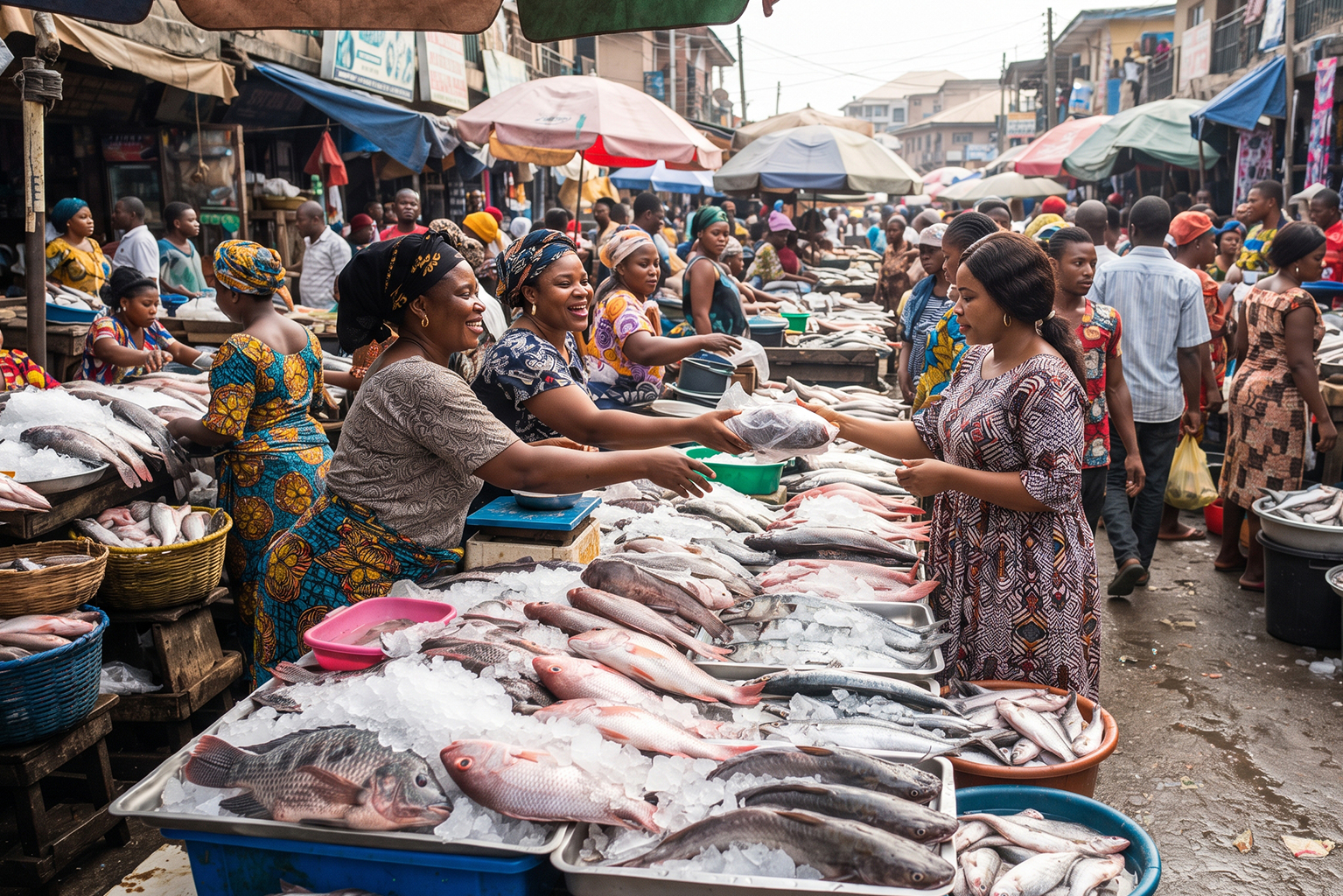
Many people assume that fish prices in Nigeria are driven purely by supply and demand. More supply should reduce prices. Higher demand should increase them. But anyone actively involved in Nigeria’s seafood market knows it is not that simple. Frozen fish prices often change even when supply appears stable and demand has not shifted significantly. As we’ve seen across the broader seafood ecosystem, including how Food and Agriculture Organization of the United Nations tracks food systems globally (https://www.fao.org), pricing is influenced by deeper structural factors. Understanding these factors helps buyers, distributors, and suppliers make better decisions and protect their margins. 1. Exchange Rate Volatility Nigeria depends heavily on imported frozen fish to meet local demand. This makes pricing highly sensitive to exchange rate movement. When the naira weakens against the dollar: Import costs increase Landing costs rise Wholesale prices adjust Even when global fish prices remain stable, local prices can increase due to currency pressure alone. Reports from the Central Bank of Nigeria (https://www.cbn.gov.ng) consistently show how exchange rate fluctuations impact food and import-dependent industries. For businesses involved in frozen seafood supply, monitoring FX trends is essential. This is why structured sourcing and planning play a key role in stabilizing operations, as explained on our Home page:https://windekfisheries.com/ 2. Import Timing and Shipment Cycles Fish does not enter Nigeria at a constant rate. It arrives in shipments. This creates periods of temporary supply changes: Multiple shipments arriving together may soften prices Delays or reduced shipments may tighten supply So pricing is influenced not just by total supply, but by timing. Smart buyers track shipment cycles instead of relying only on current availability. Insights from BusinessDay Nigeria (https://businessday.ng) also highlight how import timing and supply disruptions affect commodity pricing across Nigeria. 3. Logistics and Port Costs After fish arrives in Nigeria, several cost layers influence final pricing: Port storage and demurrage Clearing delays Transportation fuel costs Cold storage handling Every additional day at port increases cost. These logistics-related pressures are a major part of seafood supply chain challenges in Nigeria. Efficient handling and distribution systems help reduce these risks. You can explore how structured operations support this on our Services page:https://windekfisheries.com/services/ 4. Cold-Chain Handling and Product Quality Not all frozen fish in the market maintains the same quality. Proper cold-chain management preserves: Texture Weight Shelf life Poor handling leads to: Spoilage Discounting Reduced resale value This creates price variation within the same market. Businesses with strong cold-chain discipline maintain better pricing consistency and product value. You can view examples of well-maintained inventory on our Products page:https://windekfisheries.com/products/ 5. Buyer Behavior and Market Psychology One of the most overlooked factors in pricing is buyer behavior. When many buyers enter the market at the same time: Prices rise quickly When buyers hold back: Prices stabilize or drop This shows that pricing is influenced not just by supply, but by decision patterns across the market. In many cases, perception and timing drive short-term price movement just as much as actual supply levels. The Bigger Picture Fish pricing in Nigeria is not controlled by a single factor. It is influenced by: Exchange rate movement Shipment timing Logistics and port efficiency Cold-chain discipline Buyer behavior Supply and demand still matter, but they are only part of the equation. How Smart Buyers Respond Experienced buyers do not simply react to price changes. They: ✔ Monitor exchange rate trends✔ Track shipment and import cycles✔ Plan purchases ahead of demand spikes✔ Work with reliable supply and cold-chain partners Understanding the drivers behind pricing creates a significant advantage in the market. Conclusion The question is not just: “What is the price today?” The better question is: “What is driving the price right now?” That shift in thinking is what separates reactive buyers from strategic ones. In Nigeria’s seafood market, understanding the system behind pricing is what protects long-term profitability.
How Structured Credit Stabilizes the Seafood Supply Chain in Nigeria
- windekfisheries
- No Comments
In Nigeria’s seafood market, demand is not the problem. Movement is. Fish continues to sell across markets every day, yet supply chains often slow down, break, or become inconsistent. The reason is rarely a lack of buyers. It is usually a lack of structure. One of the most overlooked factors behind this instability is how credit is used. The Reality of Seafood Trading in Nigeria Nigeria consumes millions of metric tons of fish annually, with demand consistently outpacing local supply. This creates a fast-moving, opportunity-rich market. However, most transactions still rely heavily on cash-only trading or informal credit. This creates a bottleneck. Buyers often have demand but lack immediate liquidity. Suppliers have inventory but need quick payment. The result is slower movement across the chain. Why Cash-Only Systems Fall Short Cash transactions reduce immediate risk, but they introduce operational inefficiencies: Buyers purchase below actual demand Suppliers hold inventory longer than necessary Supply becomes inconsistent across markets Even in a high-demand environment, the market begins to move slower than it should. What Structured Credit Really Means Structured credit is not about giving out goods without control. It is about building a system that supports predictable trade. It typically includes: Defined payment timelines Agreed volume commitments Clear inventory tracking Transparent communication between parties This replaces uncertainty with clarity. How Structured Credit Stabilizes the Supply Chain When properly implemented, structured credit improves the entire ecosystem. 1. It Aligns Cash Flow With Sales Cycles Fish does not always sell instantly. Structured credit allows buyers to sell inventory before completing full payment, reducing pressure and improving turnover. 2. It Increases Market Liquidity Buyers can access more stock, and suppliers can move more volume. This keeps markets active and responsive. 3. It Reduces Supply Disruptions With predictable payment and delivery cycles, both sides can plan better, reducing delays and shortages. 4. It Builds Long-Term Trust Transparency and structure reduce disputes, making relationships more sustainable. Supporting Industry Insight According to the Food and Agriculture Organization (FAO), Nigeria’s fish demand significantly exceeds domestic production, driving continuous market activity. The Central Bank of Nigeria (CBN) highlights limited access to structured financing as a key constraint for agribusiness growth. The International Finance Corporation (IFC) estimates that over 60% of SMEs in emerging markets lack access to formal credit, relying on informal systems instead. These gaps directly affect how efficiently supply chains operate. The Windek Fisheries Approach At Windek Fisheries, we have learned that stable supply chains are built on systems, not assumptions. Our approach to credit focuses on: Payment schedules aligned with real sales cycles Visibility into inventory movement Strong cold-chain discipline to protect product value This allows us to move volume responsibly while reducing risk for both suppliers and buyers. What This Means for Buyers and Suppliers For buyers, structured credit provides flexibility to scale without being limited by immediate cash. For suppliers, it ensures more consistent demand and faster inventory turnover. For the market, it creates stability. Conclusion Nigeria’s seafood industry is not limited by demand. It is limited by how well supply chains are structured. Structured credit is not just a financial tool. It is infrastructure. When properly implemented, it keeps products moving, reduces risk, and allows the market to grow sustainably.
What to Look for in a Reliable Frozen Fish Distributor in Nigeria
- windekfisheries
- No Comments
The frozen fish market in Nigeria continues to grow as households, restaurants, and food businesses depend on frozen protein for daily consumption. However, choosing the right frozen fish distributor in Nigeria can make the difference between consistent supply and costly disruptions. For retailers, wholesalers, and food service operators, reliability, quality, and logistics capability are essential when selecting a distribution partner. In this article, we explore the key factors to consider when choosing a frozen fish supplier and why these elements are crucial for long-term business success. 1. Consistent Frozen Fish Supply One of the most important factors when selecting a frozen fish distributor is consistent product availability. Many businesses struggle with irregular supply due to weak distribution systems or limited sourcing networks. A professional distributor should have: Reliable sourcing partnerships Structured inventory management Demand forecasting systems At Windek Fisheries, we focus on maintaining stable supply chains to ensure our partners never face unnecessary shortages. Learn more about our distribution capabilities on the Services page. 2. Strong Cold Chain Logistics Frozen fish requires strict temperature control from storage to delivery. Without a proper cold chain logistics system, products may lose quality before reaching the customer. A reliable distributor should provide: Modern cold storage facilities Temperature-controlled transportation Professional handling procedures According to the Food and Agriculture Organization, proper cold chain infrastructure significantly reduces food losses and improves food safety across supply chains. 3. Product Quality and Safety Standards Quality is essential in the frozen fish industry. Businesses must ensure that the fish they purchase meets proper handling and safety standards. Reliable distributors typically maintain: Hygienic storage facilities Quality control processes Compliance with food safety guidelines You can explore the frozen fish varieties we supply on the Products page. 4. Transparent Business Practices Trust is one of the most valuable assets in the frozen fish trade. A professional fish distributor should operate with: Clear communication Transparent pricing Reliable delivery timelines At Windek Fisheries, transparency and partnership are core to how we operate. Learn more about our mission and operations on our About Us page. 5. Efficient Distribution Network Speed and reliability are crucial in frozen fish distribution. An efficient distributor should have: Well-planned delivery routes Experienced logistics teams Reliable transportation systems According to the World Bank, strong logistics systems are essential for reducing food waste and ensuring supply stability in developing economies. Why Businesses Choose Windek Fisheries Windek Fisheries is committed to providing dependable frozen fish distribution across Nigeria. Our approach combines: Reliable sourcing and supply planning Strong cold chain logistics Transparent supplier partnerships Consistent product quality These systems allow us to support wholesalers, retailers, and food service businesses that rely on frozen fish every day. If you would like to work with us, visit our Contact page. The Future of Frozen Fish Distribution in Nigeria As Nigeria’s population grows, the demand for frozen fish will continue to increase. Businesses that partner with reliable distributors will be better positioned to meet customer demand while maintaining quality and profitability. Windek Fisheries is committed to strengthening Nigeria’s frozen food supply chain through improved logistics, stronger partnerships, and consistent supply. For updates and industry insights, visit our Blog.
Why Frozen Fish Prices Fluctuate in Nigeria — And What Smart Buyers Should Watch
- windekfisheries
- No Comments
If you operate in Nigeria’s seafood market, you have likely asked: Why do frozen fish prices fluctuate in Nigeria? One month prices appear stable. The next month they shift. For bulk buyers, distributors, and cold room operators, these changes directly affect margins. But frozen fish price trends in Nigeria are not random. They are driven by identifiable economic and operational factors across the seafood supply chain in Nigeria. Understanding these factors allows you to plan strategically instead of reacting emotionally. 1. Exchange Rate Volatility and Fish Import Costs Nigeria depends heavily on imported frozen fish to meet domestic demand. Because these imports are paid for in foreign currency, exchange rate movement directly affects the cost of importing frozen fish into Nigeria. When the naira weakens: Landing costs increase Clearing expenses rise Wholesale prices adjust upward Even if global fish prices remain stable, currency fluctuations alone can change local pricing. Smart bulk buyers monitor: FX trends Central Bank policy signals Import window liquidity Timing bulk purchases during relative exchange rate stability is one of the most practical strategies in any bulk frozen fish buying guide in Nigeria. To understand how this affects structured distribution systems, explore our structured seafood supply approach on our👉 https://windekfisheries.com/ 2. Global Supply and Fishing Quotas Seafood pricing begins long before cargo reaches Nigerian ports. Global supply is affected by: Seasonal fishing cycles Catch quotas Fuel costs for fishing fleets Climate conditions Shipping disruptions When exporting nations experience reduced catch volumes, global prices rise. Nigeria, as an import-reliant market, absorbs this impact. Monitoring international seafood supply trends is critical for anticipating frozen fish price trends in Nigeria. 3. Port, Freight, and Clearing Costs After fish arrives in Nigeria, additional layers of cost apply: Port storage fees Demurrage Clearing delays Fuel costs for inland transport Cold storage handling Every additional day in port increases cost. In many cases, seafood supply chain challenges in Nigeria amplify global cost pressures. Reliable distribution systems reduce unnecessary handling and delay risks. You can learn more about structured logistics systems here:👉 https://windekfisheries.com/services/ 4. Cold-Chain Efficiency and Hidden Losses Price fluctuation is not always external. Internal inefficiencies can also affect pricing stability. Weak cold-chain discipline leads to: Product spoilage Texture degradation Forced discounting Reduced resale value When loss rates increase, distributors must adjust pricing to protect margins. Efficient cold-chain systems stabilize pricing by reducing waste and preserving product quality. For available frozen fish inventory maintained under strict handling standards, visit:👉 https://windekfisheries.com/products/ 5. Local Demand Surges Demand cycles also influence pricing. Frozen fish prices in Nigeria often rise during: Festive seasons Religious holidays Market supply shortages Inventory tightens, and prices respond. Strategic buyers stock ahead of predictable demand peaks rather than reacting after prices increase. How Smart Buyers Protect Their Margins Instead of chasing price changes, experienced buyers focus on: ✔ Monitoring exchange rate signals✔ Tracking global seafood supply cycles✔ Planning purchases before peak demand✔ Working with disciplined cold-chain operators✔ Building long-term supplier relationships The best time to buy frozen fish in bulk in Nigeria is often before the market signals become obvious. Frequently Asked Questions Why do frozen fish prices fluctuate in Nigeria? Frozen fish prices fluctuate due to exchange rate volatility, global supply shifts, logistics and port costs, cold-chain efficiency, and seasonal demand changes. How does exchange rate affect seafood prices in Nigeria? Because most frozen fish is imported, a weaker naira increases landing costs, leading to higher wholesale and retail prices. When is the best time to buy frozen fish in bulk in Nigeria? Bulk buyers typically secure better pricing before festive demand peaks and during periods of exchange rate stability. The Bigger Picture Nigeria remains one of Africa’s largest frozen fish markets due to strong domestic consumption and supply gaps in local production. As long as import dependency continues, pricing will remain sensitive to global and macroeconomic shifts. The businesses that thrive are not the ones chasing the lowest price. They are the ones understanding the system behind the price.
What Cold-Chain Discipline Really Means for Profit Margins in Nigeria’s Seafood Industry
- windekfisheries
- No Comments
In Nigeria’s seafood industry, profit margins are not only determined by pricing or demand — they are largely controlled by one operational factor: cold-chain discipline. From the moment fish is harvested or imported to the point it reaches the final buyer, temperature consistency determines quality, safety, and ultimately revenue. A break in the cold chain does not just affect freshness — it directly impacts profitability. At Windek Fisheries Limited, we understand that cold-chain discipline is not a technical detail. It is infrastructure. What Is Cold-Chain Discipline? Cold-chain discipline refers to maintaining strict, uninterrupted temperature control across every stage of the seafood supply chain: Processing Storage Transportation Distribution Retail handling According to the Food and Agriculture Organization (FAO), post-harvest fish losses in developing countries can reach 20–30%, largely due to inadequate cold storage and poor handling practices. Source:FAO – Global Food Losses and Food Wastehttps://www.fao.org/3/i2697e/i2697e.pdf In practical terms, every temperature fluctuation increases: Spoilage risk Product dehydration (freezer burn) Bacterial growth Customer complaints Revenue leakage The Direct Link Between Cold Chain and Profit Margins 1. Reduced Product Loss The FAO estimates that up to 35% of fish losses in Sub-Saharan Africa occur during handling, storage, and transportation. Source:FAO Fisheries & Aquaculturehttps://www.fao.org/fishery/en For seafood distributors, this translates into: Lower sellable inventory Increased write-offs Emergency discounting Cold-chain discipline protects sellable stock — and every percentage saved is direct margin preserved. 2. Stable Pricing Power Buyers pay premium prices for seafood that: Maintains texture Preserves taste Shows no thaw-refreeze damage Inconsistent storage conditions reduce product grade, forcing sellers to compete on price rather than quality. In competitive markets like Port Harcourt and other major Nigerian distribution hubs, pricing power depends on reliability. 3. Operational Efficiency Disciplined cold-chain systems reduce: Power wastage Generator overuse Emergency logistics costs Unplanned inventory losses According to the International Institute of Refrigeration (IIR), proper cold-chain management can reduce food losses by 15–20% globally. Source:International Institute of Refrigerationhttps://iifiir.org/en For seafood businesses, this is not theoretical — it is operational math. The Nigerian Context Nigeria remains one of Africa’s largest fish importers. According to FAO trade data, the country imports hundreds of thousands of metric tons of frozen fish annually to meet demand. Source:FAOSTAT Trade Datahttps://www.fao.org/faostat/en/#data/TM In high-volume import markets, cold-chain failure does not just affect individual businesses — it disrupts supply reliability across the ecosystem. For buyers, it means inconsistent supply.For suppliers, it means unpredictable revenue. Cold-chain discipline becomes a competitive advantage. What Cold-Chain Discipline Looks Like in Practice It includes: Verified freezer temperature monitoring Properly insulated storage facilities Structured inventory rotation (FIFO) Controlled loading and offloading processes Reliable cold transport systems It is not simply owning cold rooms. It is operating them with precision. Why This Matters for Buyers and Suppliers If you are a supplier, disciplined cold-chain systems protect your brand and reduce return risk. If you are a buyer, they guarantee product integrity, stable supply, and predictable quality. In a market where margins are often tight, discipline becomes profitability. The Windek Fisheries Approach At Windek Fisheries Limited, cold-chain management is built into our operational framework. We focus on: Structured storage systems Controlled product handling Consistent temperature discipline Reliable distribution planning To learn more about our operations: Explore our Home Page – https://windekfisheries.com/ Discover our Services – https://windekfisheries.com/services/ View our Products – https://windekfisheries.com/products/ Conclusion Cold-chain discipline is not optional infrastructure in Nigeria’s seafood industry. It is profit protection. In a supply-driven market where quality determines pricing and reliability determines partnerships, the businesses that treat cold-chain management as a core strategy — not a background function — are the ones that scale sustainably. If the seafood industry is to reduce losses, protect margins, and improve food security, cold-chain discipline must move from conversation to execution. External Authority Sources FAO – Global Food Losses and Food Wastehttps://www.fao.org/3/i2697e/i2697e.pdf FAO Fisheries & Aquaculturehttps://www.fao.org/fishery/en FAOSTAT Trade Datahttps://www.fao.org/faostat/en/#data/TM International Institute of Refrigerationhttps://iifiir.org/en
Why Strong Demand Still Doesn’t Guarantee Stable Supply in Nigeria’s Fish Market
- windekfisheries
- No Comments
Nigeria’s fish market is growing. Consumption continues to rise. Urban markets are active. Restaurants, retailers, and wholesalers move volume daily. Yet supply instability remains one of the biggest challenges in the Nigerian seafood industry. If demand is strong, why does supply still break down? The answer lies in infrastructure, cold-chain discipline, and operational structure. Nigeria’s Fish Demand Is Rising — But Supply Gaps Persist Nigeria consumes over 3.6 million metric tons of fish annually, while domestic production falls significantly short of national demand. According to the Food and Agriculture Organization of the United Nations, developing markets experience 20–30% post-harvest losses in perishable food sectors due to inadequate storage, handling, and logistics systems. This means even when buyers are ready, product flow is not always stable. Demand alone does not create reliability. The Real Reasons Supply Becomes Unstable 1. Payment Timing vs. Sales Cycle Fish may sell within days or weeks, yet many supply structures expect immediate settlement. When cash flow cycles are misaligned, pressure builds across the value chain. Over time, this reduces flexibility and limits volume growth. 2. Weak Cold-Chain Infrastructure Frozen fish is highly temperature-sensitive. Even short disruptions in storage or transportation can reduce quality and market value. Cold-chain inefficiencies contribute directly to: Product rejection Price reductions Spoilage losses Delayed settlements Without disciplined cold storage systems, strong demand cannot translate into stable supply. 3. Limited Visibility Across Inventory Movement When suppliers lack real-time visibility into product flow, uncertainty increases. Uncertainty leads to: Reduced order volumes Tighter credit terms Lower trust levels Conservative expansion Stable markets require transparent systems. Why Infrastructure Matters More Than Market Activity Nigeria’s seafood industry is not struggling because buyers are missing. It is struggling because systems are not fully optimized to protect product value from port to warehouse to market. Reliable supply requires: Structured cold storage Disciplined logistics handling Clear inventory tracking Payment cycles aligned with real sales velocity Businesses that invest in these areas experience lower losses and stronger long-term growth. How Windek Fisheries Approaches Supply Stability At Windek Fisheries Limited, we treat cold-chain management and operational discipline as core infrastructure — not an afterthought. Our structured approach focuses on: Temperature-controlled storage Reliable frozen fish distribution Inventory visibility Predictable operational systems You can learn more about our operations on our Home page, explore our structured logistics under Services, and review our frozen seafood categories on our Products page. Stable supply is not accidental.It is engineered. Final Thoughts: Demand Needs Structure Nigeria’s fish market will continue to grow. Population expansion, urbanization, and changing consumption patterns ensure ongoing demand. But growth without structure leads to volatility. Strong demand creates opportunity.Strong systems create stability. The businesses that win long term will not be those with the most buyers —They will be those with the strongest operational backbone.
The Hidden Cost of Poor Cold-Chain Discipline in Nigeria’s Fish Supply Chain
- windekfisheries
- No Comments
Nigeria’s fish market continues to experience strong demand across households, restaurants, and wholesale buyers. Yet despite active trading, a large portion of value is quietly lost before products ever reach consumers. The reason is not lack of buyers.It is poor cold-chain discipline. At Windek Fisheries Limited, we work daily to strengthen Nigeria’s seafood supply chain through structured operations and reliable cold storage solutions. You can learn more about our mission on our Home page. Why Cold-Chain Systems Matter in the Fish Industry Fish is one of the most temperature-sensitive food products in the market. Even minor changes in storage conditions can shorten shelf life, affect texture, and lower selling price. Across developing food systems, inadequate cold-chain infrastructure leads to significant post-harvest losses. According to the Food and Agriculture Organization of the United Nations (FAO), poor cold-chain systems are a major contributor to spoilage and reduced food quality in perishable food sectors, including fish. In Nigeria, industry analysts estimate that up to 30 percent of locally caught fish is lost before reaching the market, largely due to insufficient refrigeration and handling capacity. This loss translates to substantial economic impact on both suppliers and buyers. https://agribusiness.africa/how-cold-chain-can-reduce-post-harvest-losses-contribute-n2trn-to-nigerias-economy/ These losses represent billions of naira in wasted value every year. How Cold-Chain Breakdowns Affect the Entire Supply Chain Cold-chain problems go beyond product spoilage. They trigger a chain reaction that impacts every participant. Lower Product Quality Temperature fluctuations cause faster deterioration, leading to price reductions or rejection by buyers. Slower Payments When quality issues arise, payments are delayed or disputed, affecting cash flow for suppliers. Reduced Trust Repeated logistics failures create hesitation, smaller order volumes, and tighter trading terms. Unpredictable Supply Inconsistent handling makes planning difficult for wholesalers, retailers, and food service buyers. Why Strong Demand Alone Is Not Enough Nigeria’s growing population ensures continued demand for frozen and fresh fish products. According to the World Bank, per-capita fish consumption in Nigeria has risen significantly over the last decade, highlighting the importance of fish in household diets. https://data.worldbank.org/indicator/AG.PRD.FSHC.MT However, demand only creates opportunity when infrastructure is capable of protecting and moving products efficiently. This is why modern seafood businesses increasingly invest in structured logistics and cold-chain services to preserve product quality and minimize losses. The Windek Fisheries Approach to Cold-Chain Discipline At Windek Fisheries, cold-chain management is treated as core operational infrastructure rather than a supporting function. Our services focus on: Temperature-controlled storage Disciplined logistics handling Reliable distribution systems Inventory visibility This approach protects product value and improves settlement speed for both suppliers and buyers. Supporting Nigeria’s Market With Quality Fish Products Reliable cold-chain operations also ensure that customers receive consistent, high-quality frozen fish across all categories. You can explore our full range of seafood products including mackerel, catfish, tilapia, and other frozen protein options available for wholesale and retail buyers. Cold-Chain Discipline as a Growth Strategy Reliable refrigeration and logistics are not just about food safety. They directly influence: Revenue stability Payment predictability Market confidence Long-term partnerships Businesses that invest in disciplined cold-chain operations experience lower losses, stronger relationships, and more scalable growth. Final Thoughts Nigeria’s fish market remains one of the most active food sectors in the country. Demand is not the challenge. The real challenge is building systems strong enough to preserve value from catch to consumer. Cold-chain discipline is not simply about keeping fish frozen.It is about protecting trust, cash flow, and sustainable growth across the supply chain.
Why Cold Chain Logistics Is the Backbone of Frozen Fish Distribution in Nigeria
- windekfisheries
- No Comments
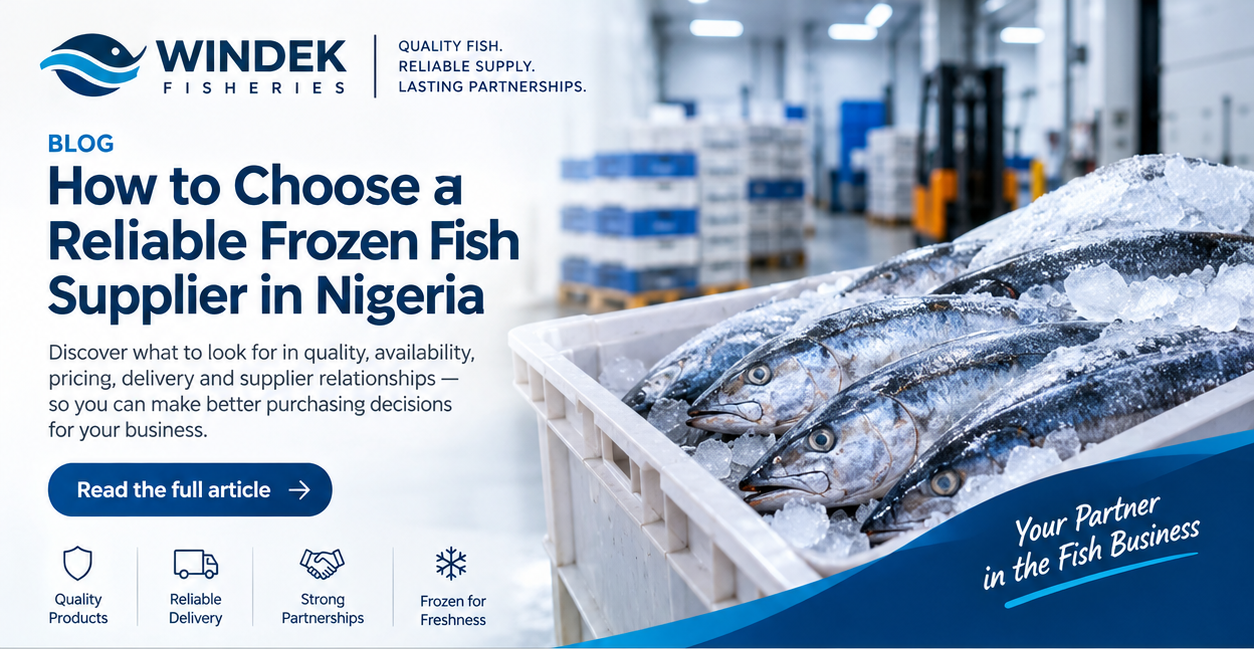
Frozen fish is one of Nigeria’s most consumed protein sources, supporting millions of households and food businesses every day. But behind every quality frozen fish product is one critical system: cold chain logistics. Without proper cold storage, handling, and transportation, frozen fish loses freshness, safety, and market value. At Windek Fisheries, cold chain logistics is the foundation of how we deliver consistent quality across Nigeria. In this article, we explain why cold chain logistics in Nigeria is essential for frozen fish supply and how Windek Fisheries is strengthening this system. What Is Cold Chain Logistics in Frozen Fish Distribution? Cold chain logistics refers to the controlled storage and transportation of frozen products at safe temperatures from source to final customer. For frozen fish, this includes: Cold storage facilities (cold rooms and freezers) Temperature-controlled transport vehicles Proper handling to avoid thawing and refreezing According to the Food and Agriculture Organization (FAO), maintaining cold chain systems significantly reduces food loss and improves food safety across developing markets. The Impact of Weak Cold Chain Systems in Nigeria When cold chain infrastructure is poor, the frozen fish industry experiences: High post-harvest losses Reduced product quality Health and safety risks Increased operating costs Unstable market supply The World Bank highlights cold chain development as a major solution to food waste and protein shortages in emerging economies. These challenges contribute directly to Nigeria’s frozen fish supply gap. How Windek Fisheries Strengthens Cold Chain Logistics in Nigeria At Windek Fisheries, cold chain logistics is a core business priority, not an optional add-on. Modern Cold Storage Facilities We invest in properly maintained cold rooms that preserve frozen fish at optimal temperatures, ensuring: Freshness retention Nutritional value preservation Long-term storage safety Learn more about our infrastructure and services on the Services page. Controlled Distribution and Transportation Our logistics systems are designed to minimize temperature fluctuation during delivery, helping retailers and food businesses receive products in excellent condition. Find out more about who we are and our operational standards on the About Us page. Consistent Product Quality for Businesses By maintaining cold chain integrity, Windek Fisheries delivers frozen fish that meets professional market standards every time. Explore our full product range on the Products page. Benefits of Strong Cold Chain Logistics for Nigeria’s Frozen Fish Market Effective cold chain systems provide major advantages: Reduced food waste Stable frozen fish supply Lower long-term costs Better food safety Higher business profitability This leads to improved food security and stronger market confidence. Why Businesses Trust Windek Fisheries As a professional fish distribution company in Nigeria, Windek Fisheries combines: Reliable cold chain logistics Consistent frozen fish supply Transparent operations Long-term partnerships Businesses rely on us for dependable frozen fish distribution nationwide. If you’re interested in working with us, visit Contact. The Future of Frozen Fish Distribution in Nigeria As Nigeria’s population continues to grow, demand for frozen protein will increase rapidly. Building strong cold chain systems will be essential to meet this demand sustainably. Windek Fisheries is committed to: Expanding cold storage infrastructure Improving distribution efficiency Supporting suppliers and retailers Strengthening Nigeria’s frozen food supply chain For career opportunities in logistics and operations, visit Careers. Partner With Windek Fisheries If you’re looking for a trusted frozen fish distributor in Nigeria with strong cold chain logistics, Windek Fisheries is ready to support your business. Website: https://www.windekfisheries.comPhone: 08066152861 Visit our Home page to get started.
Understanding the Credit Market in Nigeria’s Frozen Fish Industry
- windekfisheries
- No Comments
Nigeria’s frozen fish industry is growing rapidly, but many suppliers and distributors face a major challenge: access to structured credit and reliable payment systems. At Windek Fisheries, we believe that understanding the credit market is key to building trust with suppliers, ensuring consistent supply, and closing the frozen fish supply gap in Nigeria. In this article, we explain the credit landscape, its impact on the frozen fish supply chain, and how Windek Fisheries helps suppliers and buyers navigate it. The Role of Credit in Nigeria’s Frozen Fish Supply Chain Many suppliers hesitate to release frozen fish without immediate payment due to past defaults. This causes: Supply interruptions Limited availability for retailers and restaurants Higher prices for consumers Structured credit solutions can solve these problems. According to CBN Nigeria, access to trade credit is critical for agricultural and food businesses to maintain consistent supply and growth. How Credit Gaps Affect Frozen Fish Distribution A lack of trust and credit flexibility leads to: Suppliers holding back stock Unreliable deliveries for retailers and food service operators Increased waste due to supply chain inefficiencies Windek Fisheries addresses this by acting as a trusted fish distribution company in Nigeria, facilitating structured credit arrangements with suppliers and providing timely payments. Windek Fisheries’ Approach to Supplier Credit We provide practical solutions for frozen fish suppliers: Transparent Agreements We clearly define payment terms and expectations, so suppliers know what to expect. Long-Term Partnerships We focus on building trust and reliability, reducing risk for suppliers and encouraging them to release more frozen fish. Market Insight By understanding market demand and supply cycles, we plan inventory and deliveries to maximize efficiency and minimize risk for all parties. Visit our Products page to see the range of frozen fish, chicken, and turkey available to buyers. Benefits of Structured Credit in the Frozen Fish Industry Structured credit provides multiple benefits across the supply chain: Suppliers gain confidence to supply more stock Retailers and food service operators get reliable deliveries Consumers have access to consistent, high-quality frozen fish Reduced waste and more efficient cold chain logistics External data from FAO Nigeria highlights that proper financing and supply chain management can reduce post-harvest losses significantly. Why Businesses Trust Windek Fisheries Windek Fisheries combines credit support, strong cold chain logistics, and market expertise to solve frozen fish supply challenges. Businesses choose us because we offer: A reliable fish distribution network in Nigeria Transparent credit and payment solutions for suppliers Consistent quality and timely delivery Partnership-focused approach for long-term growth Learn more about our solutions on the Services page. Partner With Windek Fisheries Today If you are a supplier, retailer, or food service operator looking for a trusted frozen fish distributor in Nigeria, Windek Fisheries is ready to work with you. Website: www.windekfisheries.comPhone: 08066152861 For careers or joining our team, visit Careers.For inquiries, visit Contact. Together, we can strengthen Nigeria’s frozen fish supply chain through trust, credit, and reliable distribution.
- 1
- 2
Subscribe To Our Newsletter
Windek Fisheries Limited (RC: 1319250), founded in 2016, supplies Nigeria with reliable protein — frozen fish, poultry and seafood — through modern cold-chain logistics and trusted partnerships.
Working Hours
Tincidunt neque pretium lectus donec risus.
Mon – Fri: 9:00AM – 5:00PM
Sat – Sun: 10:00AM – 4:00PM
Copyright 2026 by Windek Fisheries Limited All Right Reserved.