
A buyer once shared a simple rule.
He only bought fish with cash.
His reasoning was clear: no pressure, no debt, no complications.
For a while, it worked.
But then the market shifted.
Prices dropped unexpectedly. Stock was available. Demand was building.
It was the perfect opportunity to buy.
But he didn’t have enough cash.
So he waited.
Another buyer stepped in, used structured credit, secured more volume, and bought ahead of the market.
Two weeks later, prices increased.
Same market. Same product.
Different outcomes.
The Real Question: Cash or Credit?
In Nigeria’s fish market, the conversation is often simplified:
-
Cash is safe
-
Credit is risky
But this way of thinking is incomplete.
The real question is not which one is better.
It is when each one makes sense.

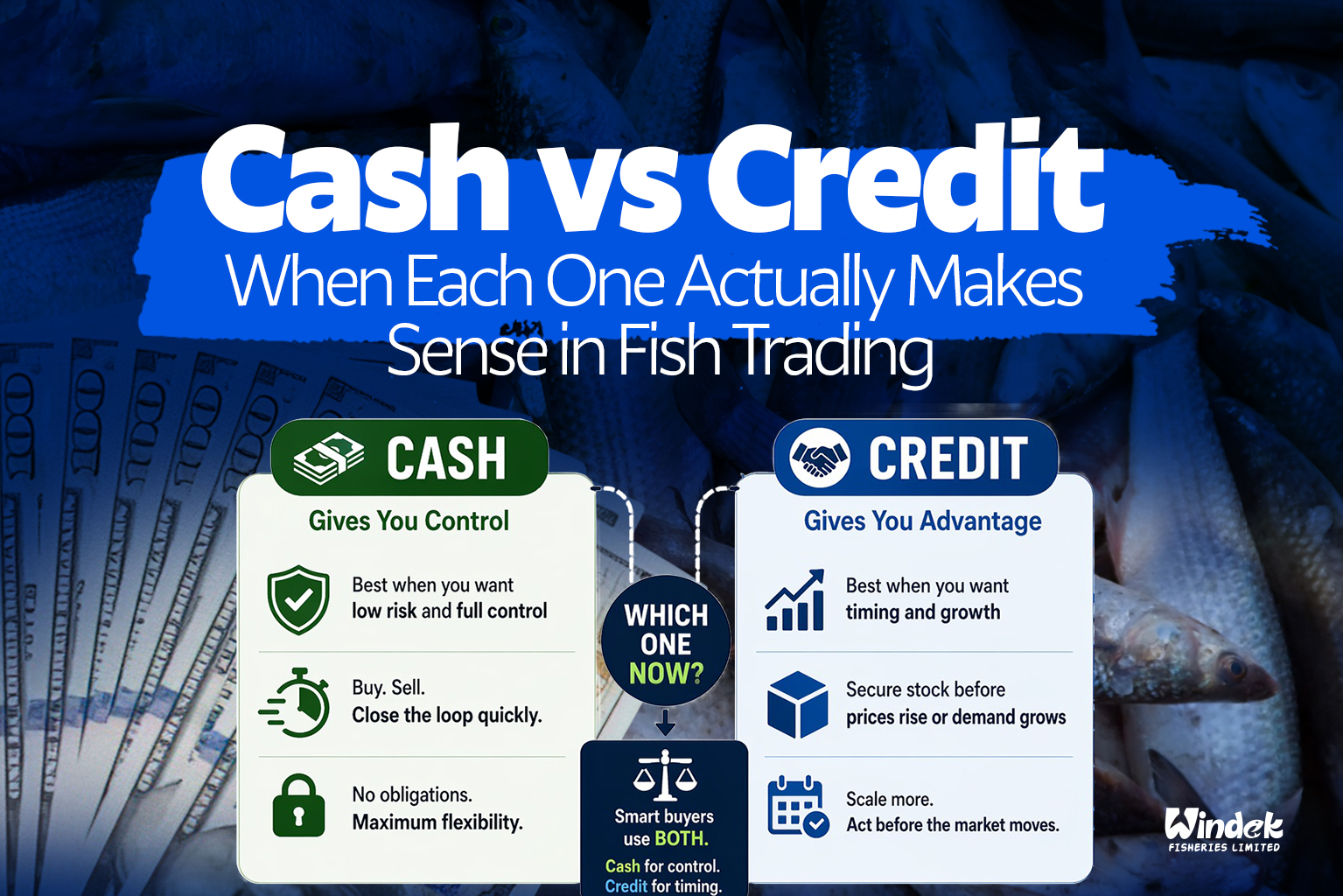
When Cash Makes Sense in Fish Trading
Cash remains a powerful tool in the right situations.
It works best when:
-
Market prices are unstable or unclear
-
You are testing a new supplier
-
You want to minimize risk exposure
-
You need flexibility with no repayment obligations
Benefits of Using Cash
-
Full control over transactions
-
Faster buying and selling cycles
-
No repayment pressure
-
Reduced financial risk
Cash helps you stay protected, especially in uncertain market conditions.
Where Cash Becomes a Limitation
Despite its advantages, cash has limits.
There are moments when:
-
Prices drop suddenly
-
Supply becomes available in large volumes
-
Demand is expected to rise
If liquidity is not available at that exact time, opportunities are missed.
In fast-moving markets like seafood, timing is everything.
When Credit Makes Sense in Fish Trading
Credit becomes valuable when timing matters more than immediate liquidity.
It works best when:
-
You want to secure stock before prices increase
-
You are buying ahead of demand cycles
-
You need to scale beyond available cash
-
Your sales flow is predictable
Benefits of Using Credit
-
Ability to act quickly on market opportunities
-
Increased buying power
-
Better positioning ahead of demand
-
Improved inventory planning
Credit allows businesses to move with the market, not behind it.
The Real Risk: Poorly Structured Credit
The biggest misconception is that credit itself is the risk.
In reality, the risk comes from unstructured credit systems.
When credit lacks clarity:
-
Payment timelines become uncertain
-
Supplier relationships weaken
-
Supply becomes inconsistent
However, when credit is structured properly:
-
Expectations are clearly defined
-
Cash flow becomes predictable
-
Trust is strengthened between buyers and suppliers
This is why many successful seafood businesses treat credit as a system, not a favor.
A Smarter Strategy: Using Both Cash and Credit
Experienced fish traders do not choose between cash and credit.
They use both strategically.
-
Cash for flexibility and control
-
Credit for timing and growth
This balanced approach allows businesses to:
-
Reduce risk
-
Capture opportunities
-
Scale efficiently
Why This Matters in Nigeria’s Seafood Market
Nigeria’s seafood market is dynamic and often influenced by:
-
Import cycles
-
Exchange rate fluctuations
-
Supply timing
-
Demand surges
In such an environment, relying only on cash can limit growth, while relying only on credit can increase risk.
The key is understanding how to use both effectively.
How to Decide: A Simple Framework
Before choosing between cash and credit, ask:
-
What is the market doing right now?
-
Do I have the liquidity to act immediately?
-
Is there a time-sensitive opportunity?
-
Are the credit terms clear and manageable?
These questions help guide better financial decisions.
Conclusion
In fish trading, profit is not just about buying at the right price.
It is about when you buy and how you position yourself before the market moves.
Cash keeps you safe.
Credit, when used with structure and discipline, helps you move ahead.
The most successful businesses understand that it is not about choosing one over the other.
It is about using both at the right time.
Internal Links
-
Services: https://windekfisheries.com/services/
-
Products: https://windekfisheries.com/products/
External Authority References
-
Food and Agriculture Organization of the United Nations – https://www.fao.org
-
International Finance Corporation – https://www.ifc.org

Leave A Comment