
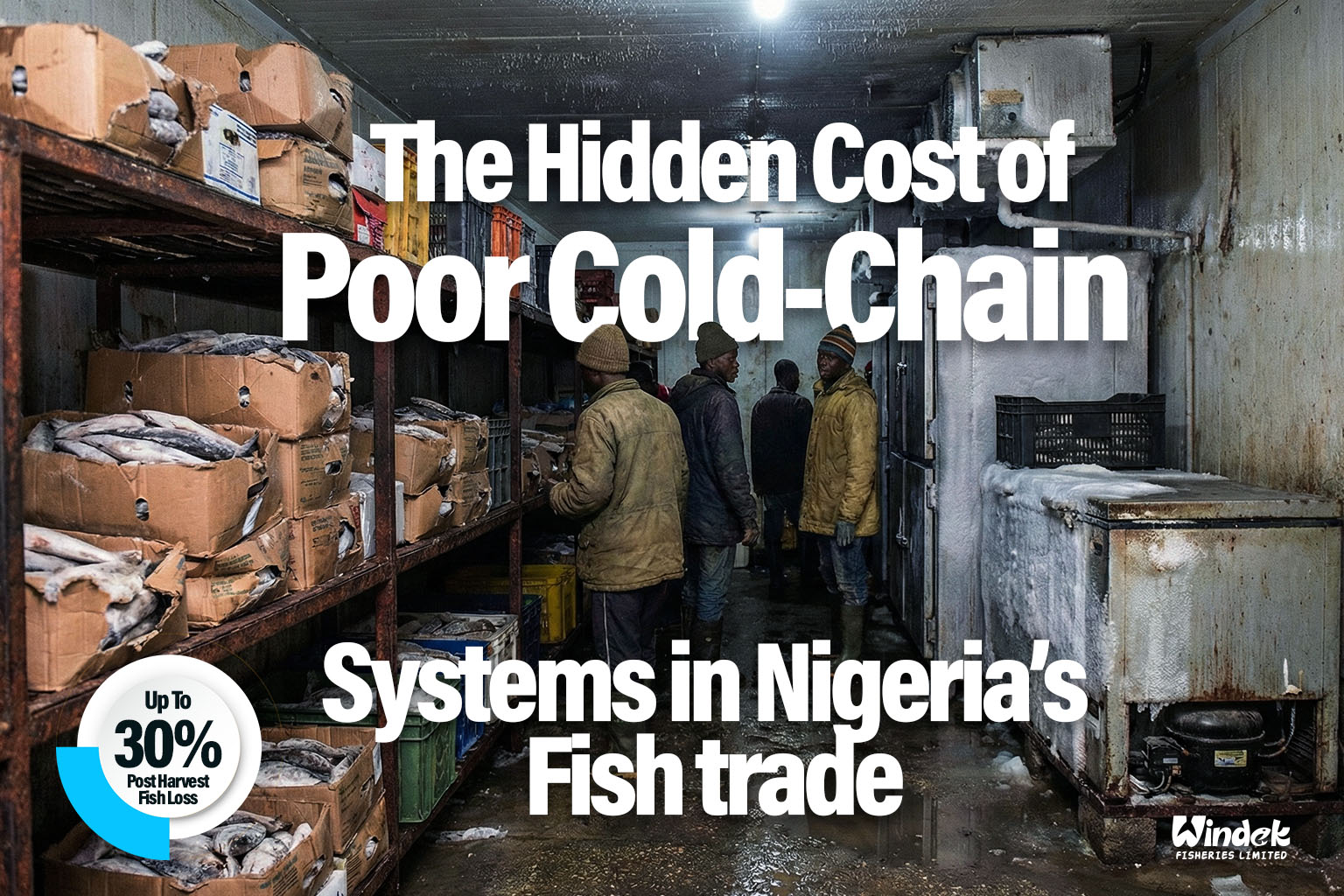
Nigeria’s fish market continues to experience strong demand across households, restaurants, and wholesale buyers. Yet despite active trading, a large portion of value is quietly lost before products ever reach consumers.
The reason is not lack of buyers.
It is poor cold-chain discipline.
At Windek Fisheries Limited, we work daily to strengthen Nigeria’s seafood supply chain through structured operations and reliable cold storage solutions. You can learn more about our mission on our Home page.
Why Cold-Chain Systems Matter in the Fish Industry
Fish is one of the most temperature-sensitive food products in the market. Even minor changes in storage conditions can shorten shelf life, affect texture, and lower selling price.
Across developing food systems, inadequate cold-chain infrastructure leads to significant post-harvest losses. According to the Food and Agriculture Organization of the United Nations (FAO), poor cold-chain systems are a major contributor to spoilage and reduced food quality in perishable food sectors, including fish.
In Nigeria, industry analysts estimate that up to 30 percent of locally caught fish is lost before reaching the market, largely due to insufficient refrigeration and handling capacity. This loss translates to substantial economic impact on both suppliers and buyers. https://agribusiness.africa/how-cold-chain-can-reduce-post-harvest-losses-contribute-n2trn-to-nigerias-economy/
These losses represent billions of naira in wasted value every year.
How Cold-Chain Breakdowns Affect the Entire Supply Chain
Cold-chain problems go beyond product spoilage. They trigger a chain reaction that impacts every participant.
Lower Product Quality
Temperature fluctuations cause faster deterioration, leading to price reductions or rejection by buyers.
Slower Payments
When quality issues arise, payments are delayed or disputed, affecting cash flow for suppliers.
Reduced Trust
Repeated logistics failures create hesitation, smaller order volumes, and tighter trading terms.
Unpredictable Supply
Inconsistent handling makes planning difficult for wholesalers, retailers, and food service buyers.
Why Strong Demand Alone Is Not Enough
Nigeria’s growing population ensures continued demand for frozen and fresh fish products. According to the World Bank, per-capita fish consumption in Nigeria has risen significantly over the last decade, highlighting the importance of fish in household diets. https://data.worldbank.org/indicator/AG.PRD.FSHC.MT
However, demand only creates opportunity when infrastructure is capable of protecting and moving products efficiently.
This is why modern seafood businesses increasingly invest in structured logistics and cold-chain services to preserve product quality and minimize losses.
The Windek Fisheries Approach to Cold-Chain Discipline
At Windek Fisheries, cold-chain management is treated as core operational infrastructure rather than a supporting function.
Our services focus on:
-
Temperature-controlled storage
-
Disciplined logistics handling
-
Reliable distribution systems
-
Inventory visibility
This approach protects product value and improves settlement speed for both suppliers and buyers.
Supporting Nigeria’s Market With Quality Fish Products
Reliable cold-chain operations also ensure that customers receive consistent, high-quality frozen fish across all categories.
You can explore our full range of seafood products including mackerel, catfish, tilapia, and other frozen protein options available for wholesale and retail buyers.
Cold-Chain Discipline as a Growth Strategy
Reliable refrigeration and logistics are not just about food safety. They directly influence:
-
Revenue stability
-
Payment predictability
-
Market confidence
-
Long-term partnerships
Businesses that invest in disciplined cold-chain operations experience lower losses, stronger relationships, and more scalable growth.
Final Thoughts
Nigeria’s fish market remains one of the most active food sectors in the country. Demand is not the challenge.
The real challenge is building systems strong enough to preserve value from catch to consumer.
Cold-chain discipline is not simply about keeping fish frozen.
It is about protecting trust, cash flow, and sustainable growth across the supply chain.
Leave A Comment