- We are Open Mon - Fri 9:00am -17:00pm
- e-mail us info@windekfisheries.com
- Our Address 19 Redemption way, Trans Amadi Port-Harcourt

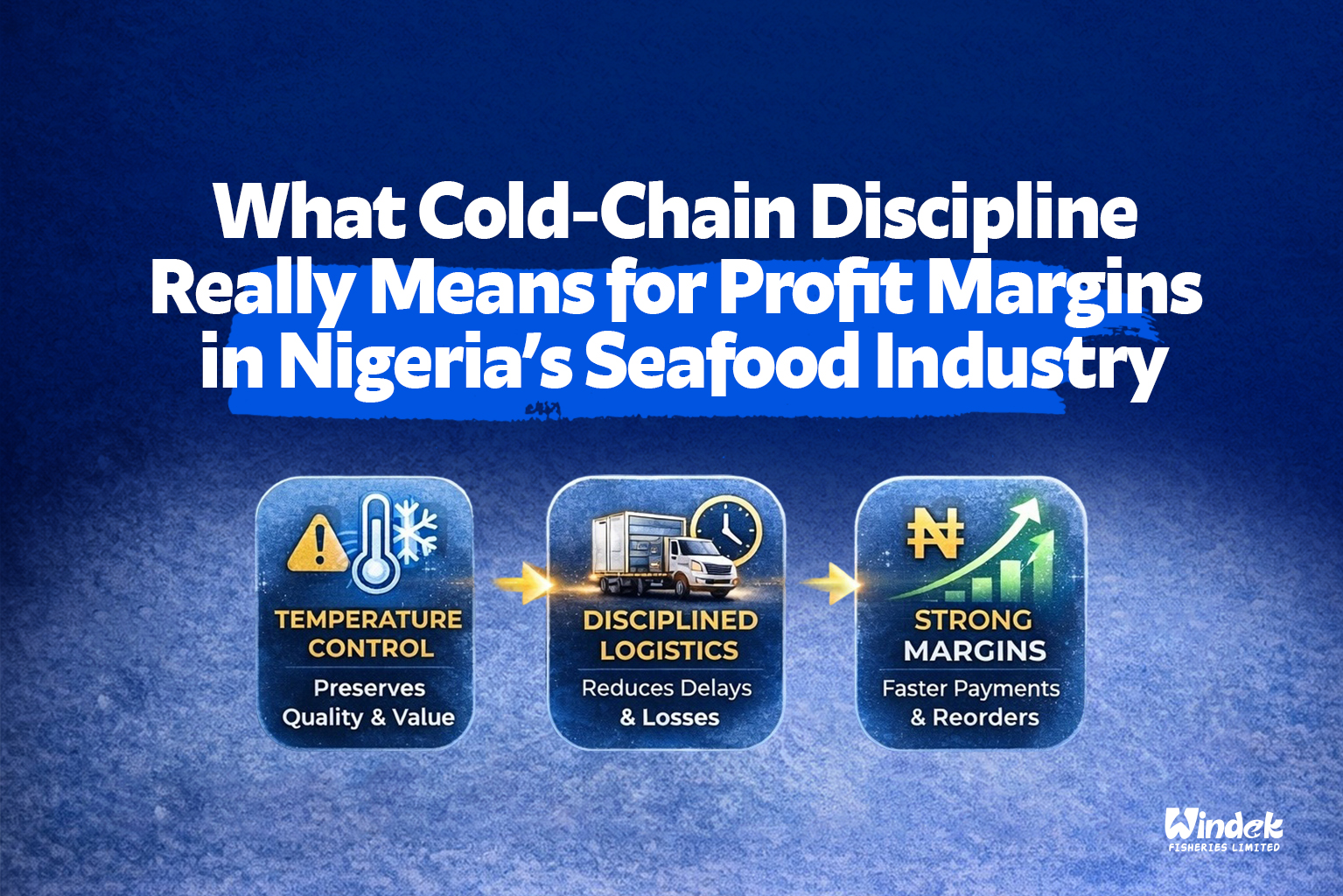
What Cold-Chain Discipline Really Means for Profit Margins in Nigeria’s Seafood Industry
- windekfisheries
- No Comments
In Nigeria’s seafood industry, profit margins are not only determined by pricing or demand — they are largely controlled by one operational factor: cold-chain discipline. From the moment fish is harvested or imported to the point it reaches the final buyer, temperature consistency determines quality, safety, and ultimately revenue. A break in the cold chain does not just affect freshness — it directly impacts profitability. At Windek Fisheries Limited, we understand that cold-chain discipline is not a technical detail. It is infrastructure. What Is Cold-Chain Discipline? Cold-chain discipline refers to maintaining strict, uninterrupted temperature control across every stage of the seafood supply chain: Processing Storage Transportation Distribution Retail handling According to the Food and Agriculture Organization (FAO), post-harvest fish losses in developing countries can reach 20–30%, largely due to inadequate cold storage and poor handling practices. Source:FAO – Global Food Losses and Food Wastehttps://www.fao.org/3/i2697e/i2697e.pdf In practical terms, every temperature fluctuation increases: Spoilage risk Product dehydration (freezer burn) Bacterial growth Customer complaints Revenue leakage The Direct Link Between Cold Chain and Profit Margins 1. Reduced Product Loss The FAO estimates that up to 35% of fish losses in Sub-Saharan Africa occur during handling, storage, and transportation. Source:FAO Fisheries & Aquaculturehttps://www.fao.org/fishery/en For seafood distributors, this translates into: Lower sellable inventory Increased write-offs Emergency discounting Cold-chain discipline protects sellable stock — and every percentage saved is direct margin preserved. 2. Stable Pricing Power Buyers pay premium prices for seafood that: Maintains texture Preserves taste Shows no thaw-refreeze damage Inconsistent storage conditions reduce product grade, forcing sellers to compete on price rather than quality. In competitive markets like Port Harcourt and other major Nigerian distribution hubs, pricing power depends on reliability. 3. Operational Efficiency Disciplined cold-chain systems reduce: Power wastage Generator overuse Emergency logistics costs Unplanned inventory losses According to the International Institute of Refrigeration (IIR), proper cold-chain management can reduce food losses by 15–20% globally. Source:International Institute of Refrigerationhttps://iifiir.org/en For seafood businesses, this is not theoretical — it is operational math. The Nigerian Context Nigeria remains one of Africa’s largest fish importers. According to FAO trade data, the country imports hundreds of thousands of metric tons of frozen fish annually to meet demand. Source:FAOSTAT Trade Datahttps://www.fao.org/faostat/en/#data/TM In high-volume import markets, cold-chain failure does not just affect individual businesses — it disrupts supply reliability across the ecosystem. For buyers, it means inconsistent supply.For suppliers, it means unpredictable revenue. Cold-chain discipline becomes a competitive advantage. What Cold-Chain Discipline Looks Like in Practice It includes: Verified freezer temperature monitoring Properly insulated storage facilities Structured inventory rotation (FIFO) Controlled loading and offloading processes Reliable cold transport systems It is not simply owning cold rooms. It is operating them with precision. Why This Matters for Buyers and Suppliers If you are a supplier, disciplined cold-chain systems protect your brand and reduce return risk. If you are a buyer, they guarantee product integrity, stable supply, and predictable quality. In a market where margins are often tight, discipline becomes profitability. The Windek Fisheries Approach At Windek Fisheries Limited, cold-chain management is built into our operational framework. We focus on: Structured storage systems Controlled product handling Consistent temperature discipline Reliable distribution planning To learn more about our operations: Explore our Home Page – https://windekfisheries.com/ Discover our Services – https://windekfisheries.com/services/ View our Products – https://windekfisheries.com/products/ Conclusion Cold-chain discipline is not optional infrastructure in Nigeria’s seafood industry. It is profit protection. In a supply-driven market where quality determines pricing and reliability determines partnerships, the businesses that treat cold-chain management as a core strategy — not a background function — are the ones that scale sustainably. If the seafood industry is to reduce losses, protect margins, and improve food security, cold-chain discipline must move from conversation to execution. External Authority Sources FAO – Global Food Losses and Food Wastehttps://www.fao.org/3/i2697e/i2697e.pdf FAO Fisheries & Aquaculturehttps://www.fao.org/fishery/en FAOSTAT Trade Datahttps://www.fao.org/faostat/en/#data/TM International Institute of Refrigerationhttps://iifiir.org/en
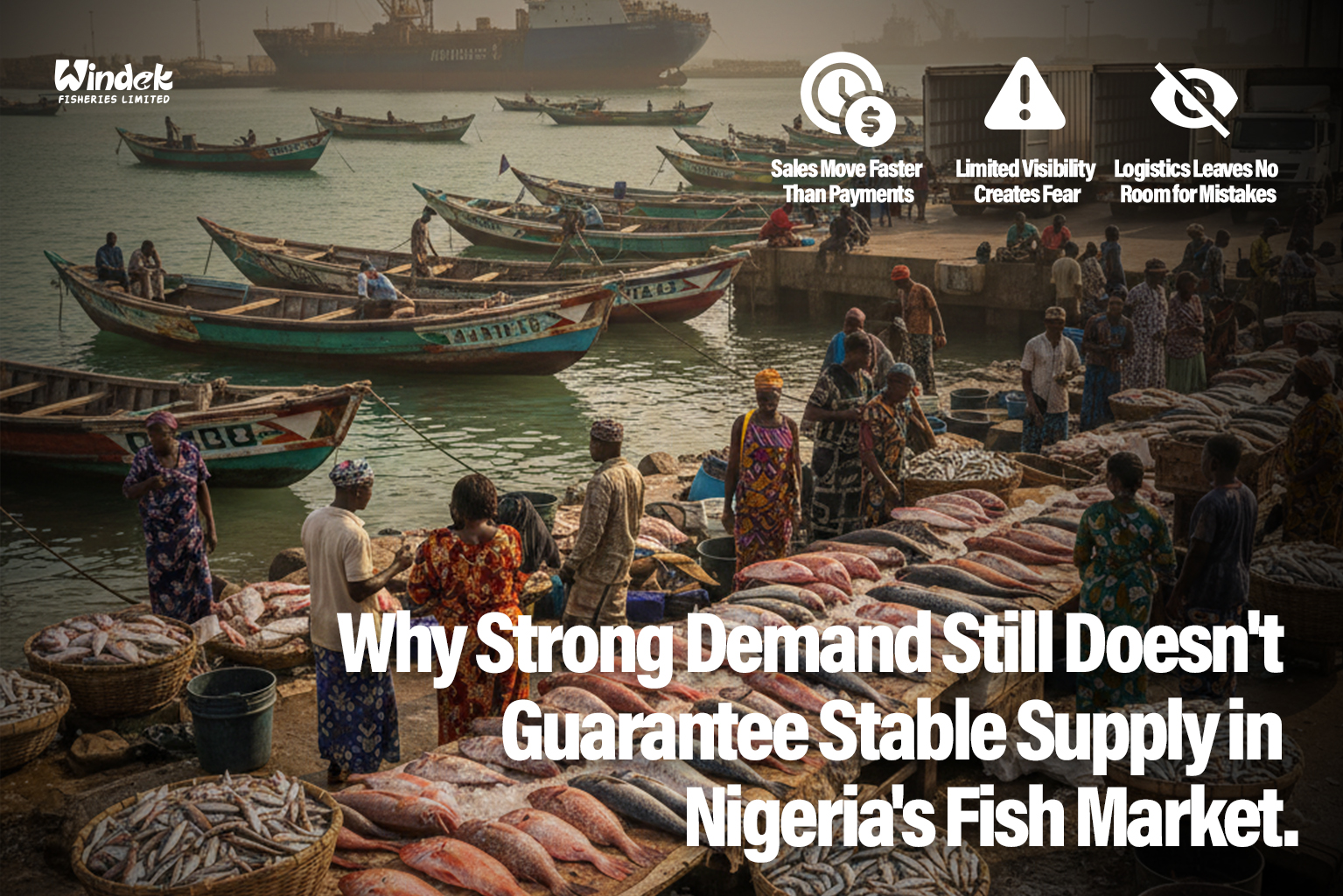
Why Strong Demand Still Doesn’t Guarantee Stable Supply in Nigeria’s Fish Market
- windekfisheries
- No Comments
Nigeria’s fish market is growing. Consumption continues to rise. Urban markets are active. Restaurants, retailers, and wholesalers move volume daily. Yet supply instability remains one of the biggest challenges in the Nigerian seafood industry. If demand is strong, why does supply still break down? The answer lies in infrastructure, cold-chain discipline, and operational structure. Nigeria’s Fish Demand Is Rising — But Supply Gaps Persist Nigeria consumes over 3.6 million metric tons of fish annually, while domestic production falls significantly short of national demand. According to the Food and Agriculture Organization of the United Nations, developing markets experience 20–30% post-harvest losses in perishable food sectors due to inadequate storage, handling, and logistics systems. This means even when buyers are ready, product flow is not always stable. Demand alone does not create reliability. The Real Reasons Supply Becomes Unstable 1. Payment Timing vs. Sales Cycle Fish may sell within days or weeks, yet many supply structures expect immediate settlement. When cash flow cycles are misaligned, pressure builds across the value chain. Over time, this reduces flexibility and limits volume growth. 2. Weak Cold-Chain Infrastructure Frozen fish is highly temperature-sensitive. Even short disruptions in storage or transportation can reduce quality and market value. Cold-chain inefficiencies contribute directly to: Product rejection Price reductions Spoilage losses Delayed settlements Without disciplined cold storage systems, strong demand cannot translate into stable supply. 3. Limited Visibility Across Inventory Movement When suppliers lack real-time visibility into product flow, uncertainty increases. Uncertainty leads to: Reduced order volumes Tighter credit terms Lower trust levels Conservative expansion Stable markets require transparent systems. Why Infrastructure Matters More Than Market Activity Nigeria’s seafood industry is not struggling because buyers are missing. It is struggling because systems are not fully optimized to protect product value from port to warehouse to market. Reliable supply requires: Structured cold storage Disciplined logistics handling Clear inventory tracking Payment cycles aligned with real sales velocity Businesses that invest in these areas experience lower losses and stronger long-term growth. How Windek Fisheries Approaches Supply Stability At Windek Fisheries Limited, we treat cold-chain management and operational discipline as core infrastructure — not an afterthought. Our structured approach focuses on: Temperature-controlled storage Reliable frozen fish distribution Inventory visibility Predictable operational systems You can learn more about our operations on our Home page, explore our structured logistics under Services, and review our frozen seafood categories on our Products page. Stable supply is not accidental.It is engineered. Final Thoughts: Demand Needs Structure Nigeria’s fish market will continue to grow. Population expansion, urbanization, and changing consumption patterns ensure ongoing demand. But growth without structure leads to volatility. Strong demand creates opportunity.Strong systems create stability. The businesses that win long term will not be those with the most buyers —They will be those with the strongest operational backbone.
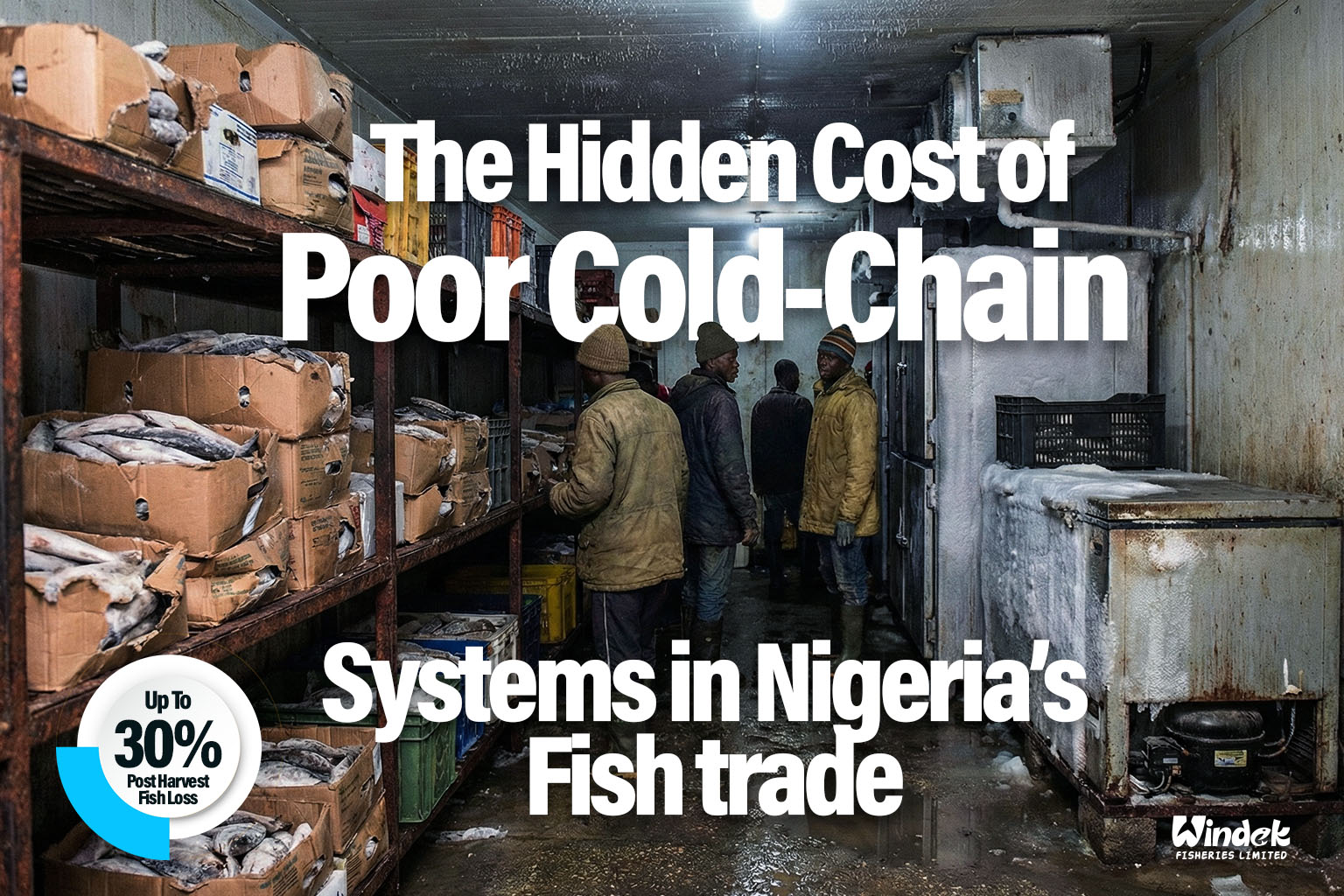
The Hidden Cost of Poor Cold-Chain Discipline in Nigeria’s Fish Supply Chain
- windekfisheries
- No Comments
Nigeria’s fish market continues to experience strong demand across households, restaurants, and wholesale buyers. Yet despite active trading, a large portion of value is quietly lost before products ever reach consumers. The reason is not lack of buyers.It is poor cold-chain discipline. At Windek Fisheries Limited, we work daily to strengthen Nigeria’s seafood supply chain through structured operations and reliable cold storage solutions. You can learn more about our mission on our Home page. Why Cold-Chain Systems Matter in the Fish Industry Fish is one of the most temperature-sensitive food products in the market. Even minor changes in storage conditions can shorten shelf life, affect texture, and lower selling price. Across developing food systems, inadequate cold-chain infrastructure leads to significant post-harvest losses. According to the Food and Agriculture Organization of the United Nations (FAO), poor cold-chain systems are a major contributor to spoilage and reduced food quality in perishable food sectors, including fish. In Nigeria, industry analysts estimate that up to 30 percent of locally caught fish is lost before reaching the market, largely due to insufficient refrigeration and handling capacity. This loss translates to substantial economic impact on both suppliers and buyers. https://agribusiness.africa/how-cold-chain-can-reduce-post-harvest-losses-contribute-n2trn-to-nigerias-economy/ These losses represent billions of naira in wasted value every year. How Cold-Chain Breakdowns Affect the Entire Supply Chain Cold-chain problems go beyond product spoilage. They trigger a chain reaction that impacts every participant. Lower Product Quality Temperature fluctuations cause faster deterioration, leading to price reductions or rejection by buyers. Slower Payments When quality issues arise, payments are delayed or disputed, affecting cash flow for suppliers. Reduced Trust Repeated logistics failures create hesitation, smaller order volumes, and tighter trading terms. Unpredictable Supply Inconsistent handling makes planning difficult for wholesalers, retailers, and food service buyers. Why Strong Demand Alone Is Not Enough Nigeria’s growing population ensures continued demand for frozen and fresh fish products. According to the World Bank, per-capita fish consumption in Nigeria has risen significantly over the last decade, highlighting the importance of fish in household diets. https://data.worldbank.org/indicator/AG.PRD.FSHC.MT However, demand only creates opportunity when infrastructure is capable of protecting and moving products efficiently. This is why modern seafood businesses increasingly invest in structured logistics and cold-chain services to preserve product quality and minimize losses. The Windek Fisheries Approach to Cold-Chain Discipline At Windek Fisheries, cold-chain management is treated as core operational infrastructure rather than a supporting function. Our services focus on: Temperature-controlled storage Disciplined logistics handling Reliable distribution systems Inventory visibility This approach protects product value and improves settlement speed for both suppliers and buyers. Supporting Nigeria’s Market With Quality Fish Products Reliable cold-chain operations also ensure that customers receive consistent, high-quality frozen fish across all categories. You can explore our full range of seafood products including mackerel, catfish, tilapia, and other frozen protein options available for wholesale and retail buyers. Cold-Chain Discipline as a Growth Strategy Reliable refrigeration and logistics are not just about food safety. They directly influence: Revenue stability Payment predictability Market confidence Long-term partnerships Businesses that invest in disciplined cold-chain operations experience lower losses, stronger relationships, and more scalable growth. Final Thoughts Nigeria’s fish market remains one of the most active food sectors in the country. Demand is not the challenge. The real challenge is building systems strong enough to preserve value from catch to consumer. Cold-chain discipline is not simply about keeping fish frozen.It is about protecting trust, cash flow, and sustainable growth across the supply chain.
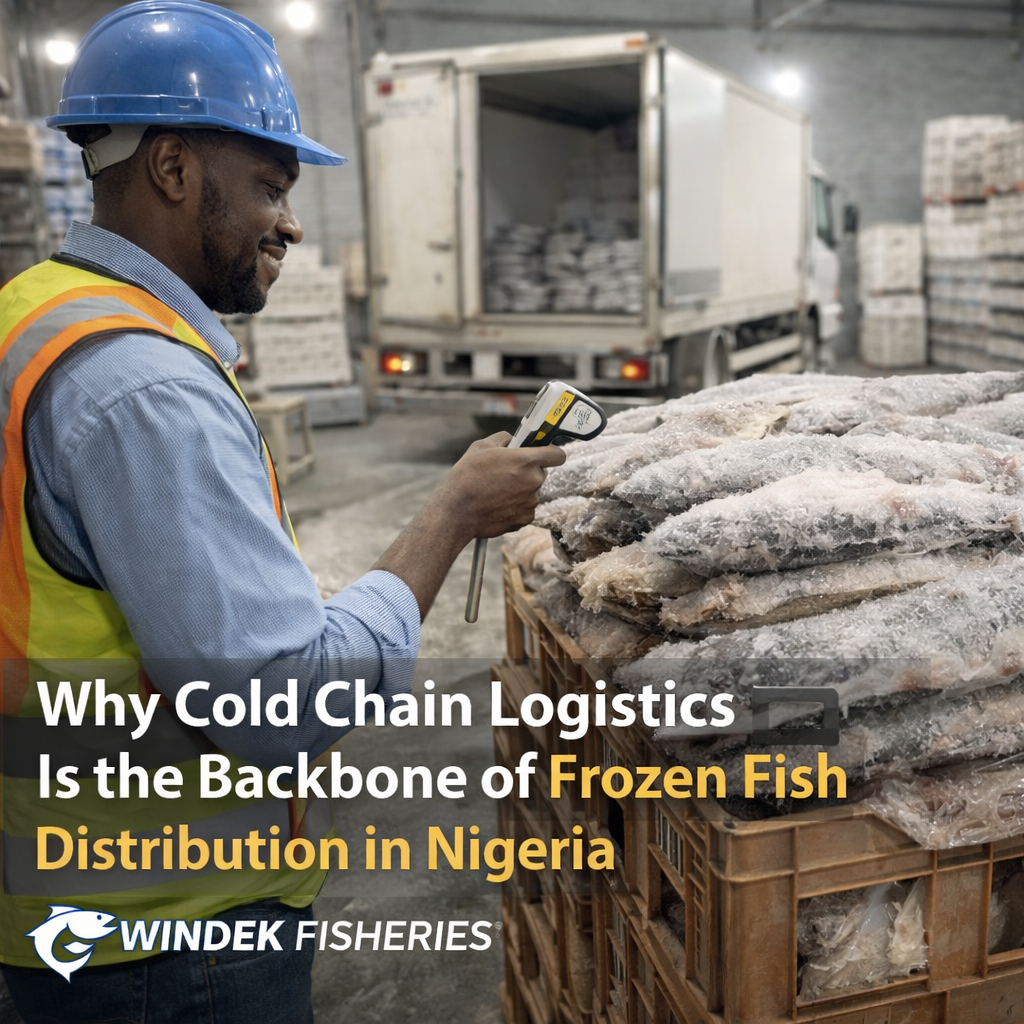
Why Cold Chain Logistics Is the Backbone of Frozen Fish Distribution in Nigeria
- windekfisheries
- No Comments
Frozen fish is one of Nigeria’s most consumed protein sources, supporting millions of households and food businesses every day. But behind every quality frozen fish product is one critical system: cold chain logistics. Without proper cold storage, handling, and transportation, frozen fish loses freshness, safety, and market value. At Windek Fisheries, cold chain logistics is the foundation of how we deliver consistent quality across Nigeria. In this article, we explain why cold chain logistics in Nigeria is essential for frozen fish supply and how Windek Fisheries is strengthening this system. What Is Cold Chain Logistics in Frozen Fish Distribution? Cold chain logistics refers to the controlled storage and transportation of frozen products at safe temperatures from source to final customer. For frozen fish, this includes: Cold storage facilities (cold rooms and freezers) Temperature-controlled transport vehicles Proper handling to avoid thawing and refreezing According to the Food and Agriculture Organization (FAO), maintaining cold chain systems significantly reduces food loss and improves food safety across developing markets. The Impact of Weak Cold Chain Systems in Nigeria When cold chain infrastructure is poor, the frozen fish industry experiences: High post-harvest losses Reduced product quality Health and safety risks Increased operating costs Unstable market supply The World Bank highlights cold chain development as a major solution to food waste and protein shortages in emerging economies. These challenges contribute directly to Nigeria’s frozen fish supply gap. How Windek Fisheries Strengthens Cold Chain Logistics in Nigeria At Windek Fisheries, cold chain logistics is a core business priority, not an optional add-on. Modern Cold Storage Facilities We invest in properly maintained cold rooms that preserve frozen fish at optimal temperatures, ensuring: Freshness retention Nutritional value preservation Long-term storage safety Learn more about our infrastructure and services on the Services page. Controlled Distribution and Transportation Our logistics systems are designed to minimize temperature fluctuation during delivery, helping retailers and food businesses receive products in excellent condition. Find out more about who we are and our operational standards on the About Us page. Consistent Product Quality for Businesses By maintaining cold chain integrity, Windek Fisheries delivers frozen fish that meets professional market standards every time. Explore our full product range on the Products page. Benefits of Strong Cold Chain Logistics for Nigeria’s Frozen Fish Market Effective cold chain systems provide major advantages: Reduced food waste Stable frozen fish supply Lower long-term costs Better food safety Higher business profitability This leads to improved food security and stronger market confidence. Why Businesses Trust Windek Fisheries As a professional fish distribution company in Nigeria, Windek Fisheries combines: Reliable cold chain logistics Consistent frozen fish supply Transparent operations Long-term partnerships Businesses rely on us for dependable frozen fish distribution nationwide. If you’re interested in working with us, visit Contact. The Future of Frozen Fish Distribution in Nigeria As Nigeria’s population continues to grow, demand for frozen protein will increase rapidly. Building strong cold chain systems will be essential to meet this demand sustainably. Windek Fisheries is committed to: Expanding cold storage infrastructure Improving distribution efficiency Supporting suppliers and retailers Strengthening Nigeria’s frozen food supply chain For career opportunities in logistics and operations, visit Careers. Partner With Windek Fisheries If you’re looking for a trusted frozen fish distributor in Nigeria with strong cold chain logistics, Windek Fisheries is ready to support your business. Website: https://www.windekfisheries.comPhone: 08066152861 Visit our Home page to get started.
Understanding the Credit Market in Nigeria’s Frozen Fish Industry
- windekfisheries
- No Comments
Nigeria’s frozen fish industry is growing rapidly, but many suppliers and distributors face a major challenge: access to structured credit and reliable payment systems. At Windek Fisheries, we believe that understanding the credit market is key to building trust with suppliers, ensuring consistent supply, and closing the frozen fish supply gap in Nigeria. In this article, we explain the credit landscape, its impact on the frozen fish supply chain, and how Windek Fisheries helps suppliers and buyers navigate it. The Role of Credit in Nigeria’s Frozen Fish Supply Chain Many suppliers hesitate to release frozen fish without immediate payment due to past defaults. This causes: Supply interruptions Limited availability for retailers and restaurants Higher prices for consumers Structured credit solutions can solve these problems. According to CBN Nigeria, access to trade credit is critical for agricultural and food businesses to maintain consistent supply and growth. How Credit Gaps Affect Frozen Fish Distribution A lack of trust and credit flexibility leads to: Suppliers holding back stock Unreliable deliveries for retailers and food service operators Increased waste due to supply chain inefficiencies Windek Fisheries addresses this by acting as a trusted fish distribution company in Nigeria, facilitating structured credit arrangements with suppliers and providing timely payments. Windek Fisheries’ Approach to Supplier Credit We provide practical solutions for frozen fish suppliers: Transparent Agreements We clearly define payment terms and expectations, so suppliers know what to expect. Long-Term Partnerships We focus on building trust and reliability, reducing risk for suppliers and encouraging them to release more frozen fish. Market Insight By understanding market demand and supply cycles, we plan inventory and deliveries to maximize efficiency and minimize risk for all parties. Visit our Products page to see the range of frozen fish, chicken, and turkey available to buyers. Benefits of Structured Credit in the Frozen Fish Industry Structured credit provides multiple benefits across the supply chain: Suppliers gain confidence to supply more stock Retailers and food service operators get reliable deliveries Consumers have access to consistent, high-quality frozen fish Reduced waste and more efficient cold chain logistics External data from FAO Nigeria highlights that proper financing and supply chain management can reduce post-harvest losses significantly. Why Businesses Trust Windek Fisheries Windek Fisheries combines credit support, strong cold chain logistics, and market expertise to solve frozen fish supply challenges. Businesses choose us because we offer: A reliable fish distribution network in Nigeria Transparent credit and payment solutions for suppliers Consistent quality and timely delivery Partnership-focused approach for long-term growth Learn more about our solutions on the Services page. Partner With Windek Fisheries Today If you are a supplier, retailer, or food service operator looking for a trusted frozen fish distributor in Nigeria, Windek Fisheries is ready to work with you. Website: www.windekfisheries.comPhone: 08066152861 For careers or joining our team, visit Careers.For inquiries, visit Contact. Together, we can strengthen Nigeria’s frozen fish supply chain through trust, credit, and reliable distribution.

Built for Wholesalers, Retailers & Food-Service Operators
- windekfisheries
- No Comments
In the seafood industry, success depends on more than access to fish. It depends on consistency, reliability, and structure. Businesses that serve end consumers cannot afford irregular supply, fluctuating quality, or missed deliveries. At Windek Fisheries, we are intentionally structured to support wholesalers, retailers, and food-service operators who depend on predictable seafood supply to keep their businesses running smoothly. We do not just supply fish. We support businesses that rely on dependable quality and delivery. Serving Wholesalers Who Need Steady Volume Wholesalers operate on volume and timing. A single disruption in supply can affect multiple downstream buyers and damage trust across the distribution chain. Windek Fisheries supports wholesalers by providing: Consistent access to bulk fish supply Structured processing and packaging Reliable order fulfillment schedules Products suitable for redistribution Our operations are designed to support wholesalers who require steady volume without compromising product quality. This allows our partners to plan inventory, manage pricing, and meet market demand with confidence. Learn more about our distribution approach on our Services page. Supporting Retailers Who Demand Consistency Retail customers notice inconsistency immediately. Changes in quality, size, or availability affect customer trust and repeat sales. We work closely with retailers who need: Uniform fish quality across batches Predictable supply cycles Products that meet customer expectations consistently At Windek Fisheries, quality control and standardized handling processes help retailers protect their brand reputation and maintain customer loyalty. Our goal is to ensure that retailers receive products they can confidently sell every day. Supplying Food-Service Operators Who Require Uniform Portions For food-service operators, consistency is operationally critical. Menu planning, portion control, and customer satisfaction depend on uniformity. We supply food-service businesses that require: Consistent portion sizes Reliable availability Proper handling for professional kitchens Our structured approach ensures that food-service operators receive fish that meets operational standards, supports menu consistency, and reduces waste. If you operate in the food-service sector, our team is equipped to support your supply needs at scale. More Than Supply: A Long-Term Seafood Partner At Windek Fisheries, we understand that B2B seafood supply is about partnership, not transactions. Our focus is on building long-term relationships with businesses that value: Predictable quality Dependable delivery Clear communication Scalable supply We invest in processes that reduce risk for our partners and support sustainable growth. Whether you are expanding distribution, opening new retail outlets, or scaling food-service operations, we are positioned to grow with you. Learn more about who we are on our About Us page or visit our Home page for an overview of our operations. Ready to Grow Your Seafood Business? If you are expanding your seafood business and need a reliable supplier built for B2B operations, Windek Fisheries is ready to support your growth. 📩 Contact us via our Contact page📈 Explore partnership opportunities through our Careers and Blog for industry insights Conclusion Wholesalers, retailers, and food-service operators succeed when supply is reliable and quality is consistent. Windek Fisheries is structured to deliver both. We do not just supply fish.We support businesses that depend on predictable seafood supply. Follow us on Instagram

How Windek Fisheries Is Solving the Frozen Fish Supply Gap in Nigeria
- windekfisheries
- No Comments
Frozen fish is one of the most important sources of protein in Nigeria, consumed by households, restaurants, hotels, and food businesses nationwide. Despite its high demand, Nigeria continues to face a persistent frozen fish supply gap, caused by inefficiencies in distribution, storage, and trust within the supply chain. At Windek Fisheries, we are committed to solving this gap through reliable sourcing, professional cold chain logistics, and partnership-driven distribution. Understanding the Frozen Fish Supply Gap in Nigeria The frozen fish supply gap in Nigeria results from several challenges in the industry: Inconsistent cold chain infrastructure Poor storage and handling practices Supply interruptions and stock shortages Limited trust between suppliers, distributors, and buyers Restricted access to structured credit for suppliers These factors often lead to losses, higher prices, and unreliable availability for businesses and consumers alike. According to FAO Nigeria, improving cold chain and distribution systems is critical for reducing post-harvest losses and ensuring food security. Learn more about how Windek Fisheries addresses these challenges on our Services page. Our Role as a Reliable Fish Distribution Company in Nigeria As a professional fish distribution company, Windek Fisheries focuses on creating stability across the frozen fish value chain. Structured Sourcing and Inventory Planning We work with trusted suppliers and plan inventory based on real market demand. This reduces shortages and ensures a steady flow of frozen fish throughout the year. Explore the varieties of frozen fish, chicken, and turkey we supply on our Products page. Professional Distribution Systems Our distribution process is designed to minimize delays and prevent temperature abuse. This allows us to consistently deliver frozen fish that meets quality standards. Learn more about our company and operations on our About Us page. Market Responsiveness By monitoring customer demand patterns, we ensure retailers and food businesses access frozen fish when they need it, rather than after shortages occur. Strengthening Cold Chain Logistics in Nigeria Maintaining proper cold chain logistics is essential for preserving frozen fish quality. Without temperature control, products lose freshness and can spoil quickly, leading to losses for suppliers and retailers. Windek Fisheries invests in state-of-the-art cold storage and logistics systems, which include: Modern cold rooms that maintain optimal temperature Controlled handling and transportation to prevent thawing Reduced post-harvest losses, ensuring affordable protein availability For a detailed look at our service offerings, visit Services. For broader insights into cold chain logistics in Africa, see this World Bank report on cold chain infrastructure. Building Trust to Unlock Supply A key factor in Nigeria’s frozen fish supply gap is lack of trust, especially around payment terms. Suppliers often hesitate to release products without immediate payment due to past defaults. Windek Fisheries addresses this by: Operating with transparent business practices Building long-term partnerships with suppliers Supporting structured credit arrangements that reduce risk To learn more about joining our network, visit Contact. Impact on Businesses and Consumers By addressing supply and logistics challenges, Windek Fisheries creates value for everyone: Suppliers benefit from reliable off-take and professional partnerships Retailers and food businesses enjoy consistent availability Consumers gain access to quality frozen fish at stable prices This contributes directly to food security and market stability in Nigeria. Our Vision for Nigeria’s Frozen Fish Industry We envision a frozen fish industry that is efficient, transparent, and sustainable, featuring: A stronger national cold chain network Collaboration between suppliers and distributors Reduced waste and supply volatility Reliable access to frozen protein nationwide Windek Fisheries is committed to leading this transformation. Learn more about our mission on the About Us page. Partner With Windek Fisheries If you are looking for a trusted frozen fish distributor in Nigeria or want to explore partnership opportunities, Windek Fisheries is ready to work with you. Website: www.windekfisheries.comPhone: 08066152861 For careers or joining our team, visit Careers.For inquiries, visit Contact. Together, we can close the frozen fish supply gap and build a stronger, more reliable food supply system for Nigeria.
Frozen Fish, Chicken & Turkey Distributor in Nigeria
- windekfisheries
- No Comments
In Nigeria’s fast-growing food supply industry, reliability, quality, and hygiene are non-negotiable. At Windek Fisheries Limited, we have built our reputation on delivering premium frozen fish and poultry products while maintaining strict cold-chain standards across the country. Since 2016, Windek Fisheries Limited has remained a trusted name for businesses and households seeking consistent access to high-quality frozen fish, chicken, and turkey in Nigeria. Who We Are Windek Fisheries Limited is a leading distributor of frozen fish, chicken, and turkey serving customers nationwide. Our operations are designed to ensure that every product reaches customers in optimal condition, preserving freshness, nutritional value, and safety. We understand the importance of dependable protein supply, especially for retailers, restaurants, and food service businesses. That is why our processes focus on efficiency, hygiene, and consistency from storage to distribution. Our Commitment Since 2016 Since our establishment in 2016, Windek Fisheries Limited has grown steadily by prioritizing what matters most to our customers: Reliable product availability Professional cold-chain handling High hygiene standards Responsive, customer-focused service Our long-standing relationships with suppliers and customers are built on trust, transparency, and performance. What We Do Differently Our operations are guided by a simple but effective focus: Premium Products We supply carefully selected frozen fish and poultry products that meet quality expectations for both retail and commercial use. Strict Hygiene Standards Food safety is at the core of our business. We adhere to professional hygiene practices across storage, handling, and distribution. Consistent Supply We understand that interruptions in supply can affect businesses and households. Our systems are designed to ensure steady availability year-round. Customer-Focused Service Every customer matters. We work closely with our partners to understand their needs and provide dependable support. Who We Serve Windek Fisheries Limited proudly serves a wide range of customers across Nigeria, including: Retailers and frozen food sellers Supermarkets and grocery stores Restaurants and food vendors Hotels and hospitality businesses Cooperatives and bulk buyers Food service brands and distributors Whether you are a small retailer or a large food service operator, we are equipped to support your protein supply needs. Supporting Nigeria’s Food Supply Chain As a professional distributor of frozen fish and poultry, Windek Fisheries Limited plays an important role in supporting food availability and food safety in Nigeria. Our investment in proper cold-chain operations helps reduce spoilage, maintain quality, and ensure that consumers receive safe, nutritious products. Partner With Windek Fisheries Limited If you are looking for a reliable supplier of frozen fish, chicken, and turkey in Nigeria, Windek Fisheries Limited is ready to work with you. Our experience, nationwide reach, and commitment to quality make us a dependable partner for long-term growth. Contact Windek Fisheries Limited today to learn more about our products, partnership opportunities, and distribution services.