
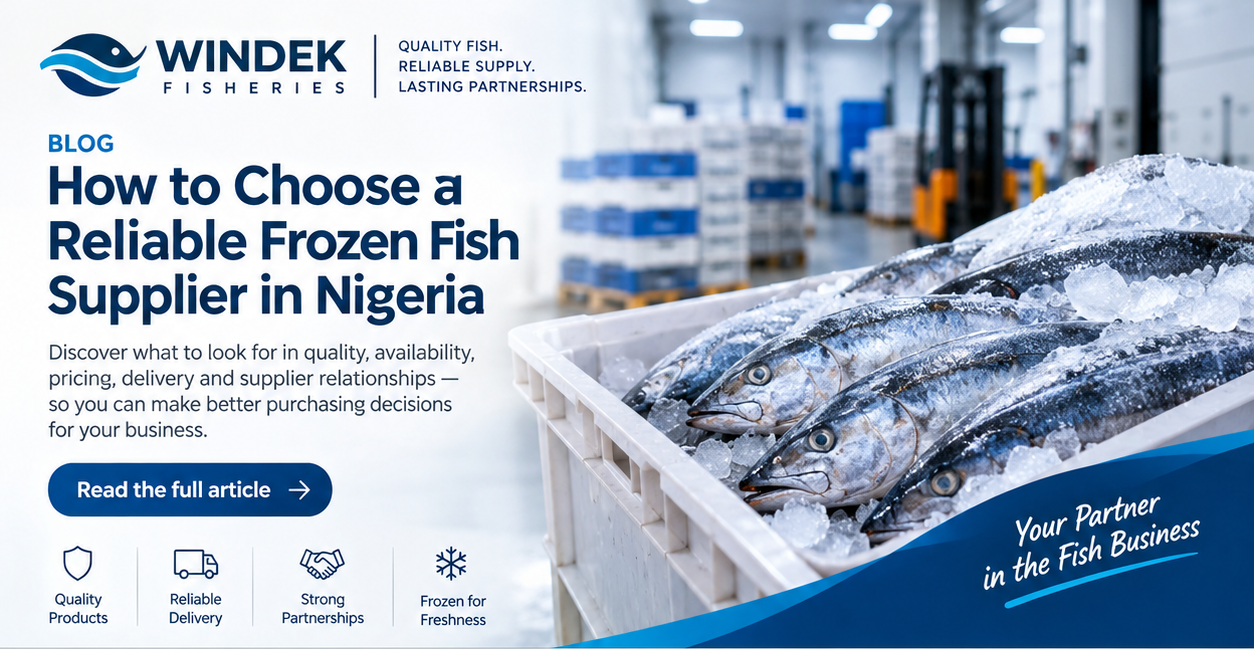
How to Choose a Reliable Frozen Fish Supplier in Nigeria
Finding a reliable frozen fish supplier in Nigeria is an important decision for wholesalers, retailers, supermarkets, restaurants, caterers, and other food-service businesses. The supplier you choose can influence your product availability, inventory planning, customer satisfaction, and ability to meet demand.
While price is often one of the first things buyers consider, a good purchasing decision involves much more than finding the cheapest offer. Buyers also need to consider product quality, availability, communication, delivery arrangements, and the supplier’s ability to meet their business requirements consistently.
Whether you operate a frozen food shop, distribute fish to retailers, or purchase fish for a restaurant, understanding what to look for in a supplier can help you make better sourcing decisions.
In this guide, we explain the key factors to consider when choosing a frozen fish supplier in Nigeria.
1. Look Beyond the Purchase Price
Price matters in every business, but the lowest quotation does not automatically represent the best value.
Before placing an order, consider the full cost of the purchase. This may include transportation, storage, handling, inventory holding costs, and the financial impact of stock that takes longer than expected to sell.
For example, purchasing a large quantity of fish at a lower unit price may appear attractive. However, if your business lacks sufficient freezer capacity or customer demand is lower than anticipated, the additional inventory may put unnecessary pressure on your operations and working capital.
A better approach is to compare suppliers based on the overall value they offer, including product specifications, availability, order fulfilment, and communication.
The goal is not simply to buy fish cheaply. It is to purchase stock that makes sense for your business.
2. Confirm Product Quality and Handling Practices
Product quality is essential when sourcing frozen fish. Poor handling or inappropriate storage conditions can compromise product quality and food safety.
Before choosing a supplier, ask about how products are stored, handled, transported, and protected throughout the distribution process.
Important considerations include:
- Whether appropriate frozen storage conditions are maintained.
- Whether storage and transportation arrangements protect the product.
- Whether products are inspected and handled appropriately.
- Whether product specifications and packaging are clearly communicated.
- Whether the supplier can explain the procedures used to maintain product quality.
Do not rely on appearance or verbal assurances alone. Where appropriate, request relevant product information and agree on quality requirements before placing an order.
For frozen fish, maintaining the cold chain from storage through transportation is an important part of protecting product quality.
3. Check Availability Before You Commit
A supplier may offer an attractive price, but can they provide the product and quantity your business requires?
Availability is particularly important for wholesalers, retailers, restaurants, and caterers that depend on specific products to serve their customers.
Before placing an order, ask:
- Which fish species and sizes are currently available?
- What quantities can be supplied?
- Are the products available for immediate dispatch or future delivery?
- How much notice is required for larger orders?
- How will changes in availability be communicated?
These questions help you plan purchases around actual supply conditions rather than assumptions.
If your business relies on particular products, establish a routine for checking availability and discussing upcoming requirements with your supplier.
4. Evaluate Delivery and Order Fulfilment
Your purchasing process does not end when an order is confirmed. The product must also reach its destination under appropriate handling conditions and within the agreed delivery arrangements.
For businesses with daily sales, scheduled catering commitments, or regular wholesale customers, delivery planning can make a significant difference.
When evaluating a frozen fish supplier, clarify:
- Expected dispatch and delivery timelines.
- Delivery arrangements and responsibilities.
- Minimum order quantities, where applicable.
- How delays or supply changes are communicated.
- What happens when an order does not match the agreed specifications.
Avoid assuming that every supplier offers the same delivery services or terms. Confirm the arrangements that apply to your location and order before committing.
Clear expectations help reduce misunderstandings and make it easier for both parties to plan.
5. Choose a Supplier That Communicates Clearly
Communication is one of the most overlooked factors in supplier selection.
Imagine that you need a particular quantity of fish for the coming week. You contact your supplier, but you cannot get a clear answer about availability, pricing, or delivery.
Even if the supplier eventually fulfils the order, the uncertainty makes it harder to plan your business.
A reliable supplier relationship should make it easier to obtain important information before problems arise.
Look for a supplier that communicates clearly about:
- Available products and quantities.
- Pricing and order requirements.
- Changes that may affect fulfilment.
- Delivery schedules.
- Future supply expectations, where this information is available.
Good communication does not mean that supply conditions will never change. It means that both parties can discuss changes early and make informed decisions.
6. Find a Supplier That Understands Your Business
Different buyers have different sourcing requirements.
A wholesaler may prioritise volume and regular replenishment. A retailer may need a dependable selection of products that match customer demand. A restaurant or caterer may require consistency in product specifications and quantities.
Before choosing a supplier, explain your business requirements and assess whether the supplier can accommodate them.
Discuss your usual order quantities, preferred products, purchasing frequency, storage capacity, and delivery expectations.
This information can help both parties establish a more practical ordering process.
As your business grows, your requirements may also change. Maintaining an open conversation with your supplier can help you prepare for these changes.
7. Understand the Commercial Terms
A good supplier relationship requires clear commercial expectations.
Before placing an order, ensure you understand the pricing, payment arrangements, order confirmation process, minimum quantities, delivery charges, and any applicable conditions.
If credit terms are available, clarify the approved limit, payment schedule, and responsibilities of both parties. Do not assume that credit is automatically available simply because a supplier has offered it to another buyer.
Written agreements and clear records can help prevent disputes and support a more sustainable business relationship.
The objective is to create an arrangement that works commercially for both the supplier and the buyer.
8. Start With a Clear Ordering Process
Once you have identified a potential supplier, establish a straightforward process for placing and tracking orders.
A practical process should include:
- Review your current stock and expected customer demand.
- Identify the fish products and quantities required.
- Confirm availability, specifications, and pricing.
- Agree on payment and delivery arrangements.
- Confirm the order details in writing.
- Check the delivery against the agreed requirements.
- Record the purchase and update your inventory.
This process helps reduce avoidable misunderstandings and gives you better information for future purchasing decisions.
Over time, your order records can also help you identify purchasing patterns, assess supplier performance, and plan replenishment more effectively.
Why the Right Frozen Fish Supplier Matters
Choosing a frozen fish supplier is not just about completing your next purchase. It is about establishing a sourcing arrangement that supports the way your business operates.
The right supplier for your business should be evaluated against your actual needs, including product quality, availability, communication, delivery arrangements, and commercial terms.
No supplier can guarantee that the market will never change. However, clear expectations, consistent communication, and thoughtful purchasing decisions can help businesses manage uncertainty more effectively.
Partner With Windek Fisheries Limited
At Windek Fisheries Limited, we understand that fish businesses need more than a product. They need clear communication, dependable sourcing arrangements, and a supplier relationship that supports their business requirements.
We serve the frozen fish market with a focus on wholesalers, retailers, and food-service operators.
If your business is looking for a frozen fish supply partner, contact our team to discuss your product requirements and sourcing needs.
Windek Fisheries Limited
Website: https://windekfisheries.com/
Email: info@windekfisheries.com
Phone: 08066152861
Head Office: 19 Redemption Road, Trans-Amadi, Port Harcourt, Rivers State, Nigeria.
Frequently Asked Questions
How do I find a reliable frozen fish supplier in Nigeria?
Start by identifying your product and quantity requirements. Then evaluate potential suppliers based on product handling, availability, communication, delivery arrangements, pricing transparency, and commercial terms. Confirm the details before placing an order.
What should I check before buying frozen fish in bulk?
Review your expected demand, available freezer capacity, product specifications, storage arrangements, supplier availability, delivery plans, and total purchasing costs. Buying in bulk should align with your ability to store and sell the stock.
Is the cheapest frozen fish supplier always the best option?
No. A lower purchase price may not represent the lowest overall cost. Buyers should also consider transportation, storage, handling, product specifications, order fulfilment, and the risk of holding stock longer than expected.
Why is cold-chain management important when buying frozen fish?
Appropriate frozen storage and transportation conditions help protect product quality and food safety. Buyers should ask suppliers about their handling practices and ensure that products remain under appropriate conditions throughout distribution.
What questions should I ask a frozen fish supplier?
Ask about product availability, species and sizes, quantities, pricing, minimum orders, storage and handling, delivery timelines, payment terms, and how changes to an order will be communicated.
Can Windek Fisheries supply my business?
Windek Fisheries Limited serves the frozen fish market, with a focus on wholesalers, retailers, and food-service operators. Contact the company directly to discuss current product availability, quantities, and applicable supply arrangements.

Leave A Comment