
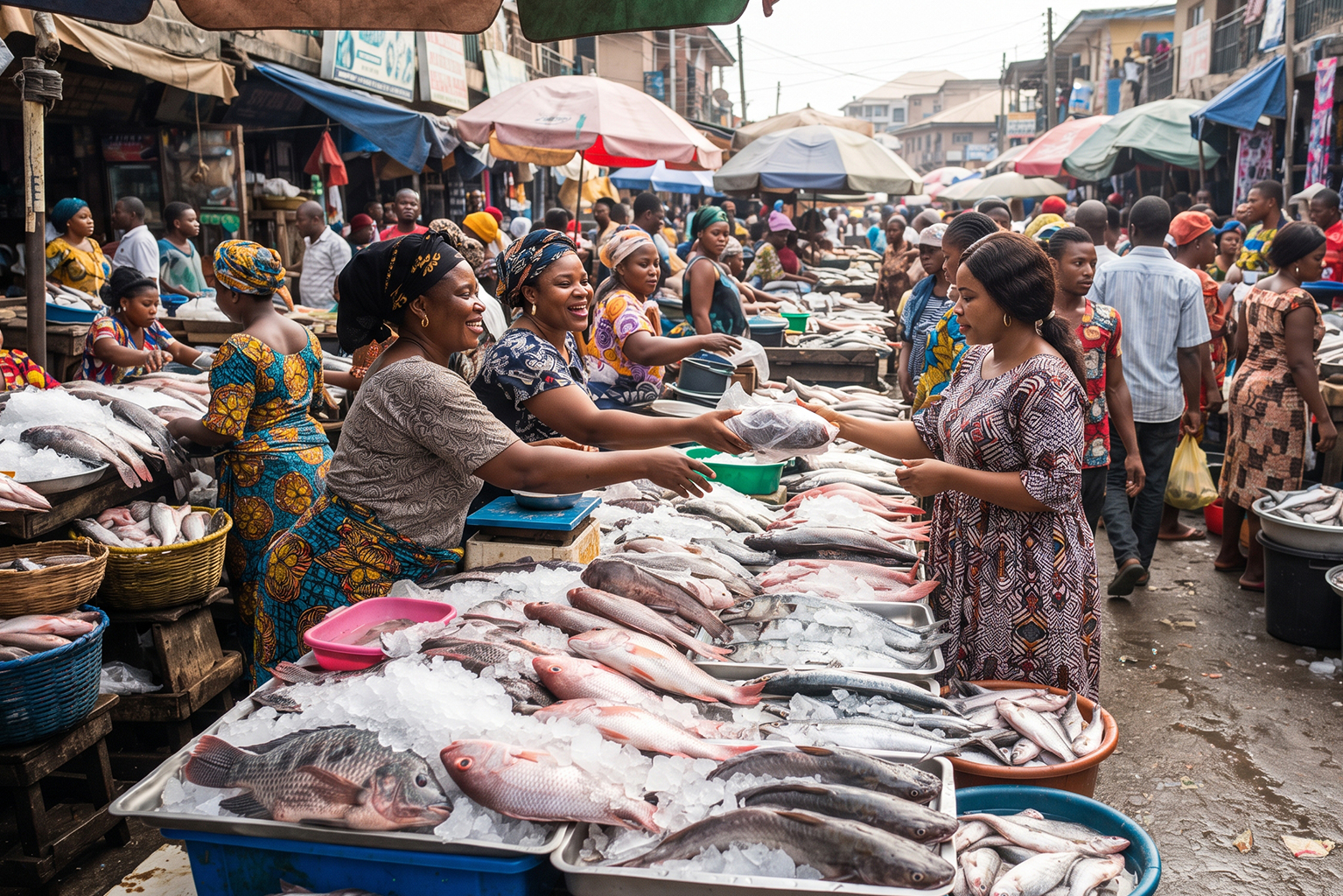
The Nigerian fish market continues to present both opportunities and challenges for businesses involved in buying, selling and distributing fish.
Recent market reports have highlighted significant price movements and pressure from transportation, cold storage, fuel and other operating costs. In June 2026, for instance, Nairametrics reported a sharp increase in Titus fish prices in surveyed Lagos markets.
In August 2026, the News Agency of Nigeria also reported concerns from fish traders and consumers in Abuja over rising prices, with traders pointing to higher operating costs across the supply chain.
For fish buyers, the question is no longer simply “What is today’s price?”
The more important question is:
“How should I make purchasing decisions in a changing market?”
Understanding the Current Fish Market
Fish prices do not move in isolation.
They can be affected by several factors, including:
- Supply availability
- Import conditions
- Transportation costs
- Cold-chain expenses
- Fuel costs
- Consumer demand
- Exchange-rate conditions
- Seasonal changes
- Distribution costs
The World Bank maintains monthly food-price estimates covering 73 Nigerian markets, including fish, providing a useful indication of how market prices can vary across locations and periods.
This means buyers should avoid treating the market as one fixed price.
What is happening in one location may not necessarily reflect what is happening somewhere else.


What Does This Mean for Fish Buyers?
1. Don’t Make Purchasing Decisions Based Only on Price
A low price can look attractive.
But the real question is whether that price supports your business.
Before buying, consider:
- How quickly will the product sell?
- What is current demand?
- What are customers willing to pay?
- How much will storage cost?
- How reliable is the supply?
The cheapest available stock is not automatically the best commercial opportunity.
2. Pay Attention to Customer Behaviour
Price changes can influence buying behaviour.
When prices increase, some customers may reduce the quantity they purchase or switch to alternative products.
That means businesses need to watch not only what suppliers are charging but also what customers are actually buying.
This information can help buyers avoid overstocking.
3. Think About Stock Turnover
A fish business needs more than inventory.
It needs inventory that moves.
If you buy large quantities but sales slow down, your working capital remains tied up.
That can affect your ability to make the next purchase, pay suppliers or respond to a new market opportunity.
Good purchasing therefore requires an understanding of expected turnover.
4. Build Stronger Supply Relationships
When the market becomes unpredictable, reliable suppliers become increasingly important.
A strong supplier relationship can give businesses better visibility around:
- Availability
- Product specifications
- Expected deliveries
- Pricing discussions
- Market changes
This is particularly important for wholesalers, retailers and food-service operators that depend on consistent supply.
5. Start Watching Market Signals Earlier
One mistake businesses make is reacting only after the market has already moved.
By then, the options may be limited.
Instead, watch for early signals:
Are suppliers reporting tighter availability?
Are customers changing their buying patterns?
Are transportation costs increasing?
Are certain products moving faster than others?
Are prices becoming more volatile?
These signals can help businesses adjust their purchasing strategy before problems become urgent.
Nigeria’s Fish Demand Creates Opportunities
Despite market pressures, demand for fish remains significant.
Recent industry research identifies Lagos, Abuja, Kano, Ibadan, Port Harcourt and Onitsha among important demand centres for frozen seafood.
This creates opportunities throughout the supply chain.
But opportunity also requires discipline.
Businesses need to understand what their customers want, how quickly products move and where supply is coming from.
A Practical Checklist for Fish Buyers
Before your next major purchase, ask:
1. What is happening to supply?
2. What is happening to demand?
3. How quickly is this product moving?
4. What are my storage and logistics costs?
5. What price can my customers realistically accept?
6. How reliable is my supplier?
7. What happens if the market moves against me?
These questions can help turn purchasing from a simple price negotiation into a more strategic business decision.
What Windek Fisheries Is Watching
At Windek Fisheries, our interest goes beyond the price of fish.
We pay attention to the wider market because supply decisions affect wholesalers, retailers and food-service operators all the way down the chain.
The market will continue to change.
The businesses that keep watching, learning and adjusting will have more information to work with when making their next purchasing decision.
Looking for Reliable Fish Supply?
Windek Fisheries supplies fish to businesses that need dependable quality and consistent supply.
Call: 08066152861
Website: windekfisheries.com
Email: info@windekfisheries.com

Leave A Comment