
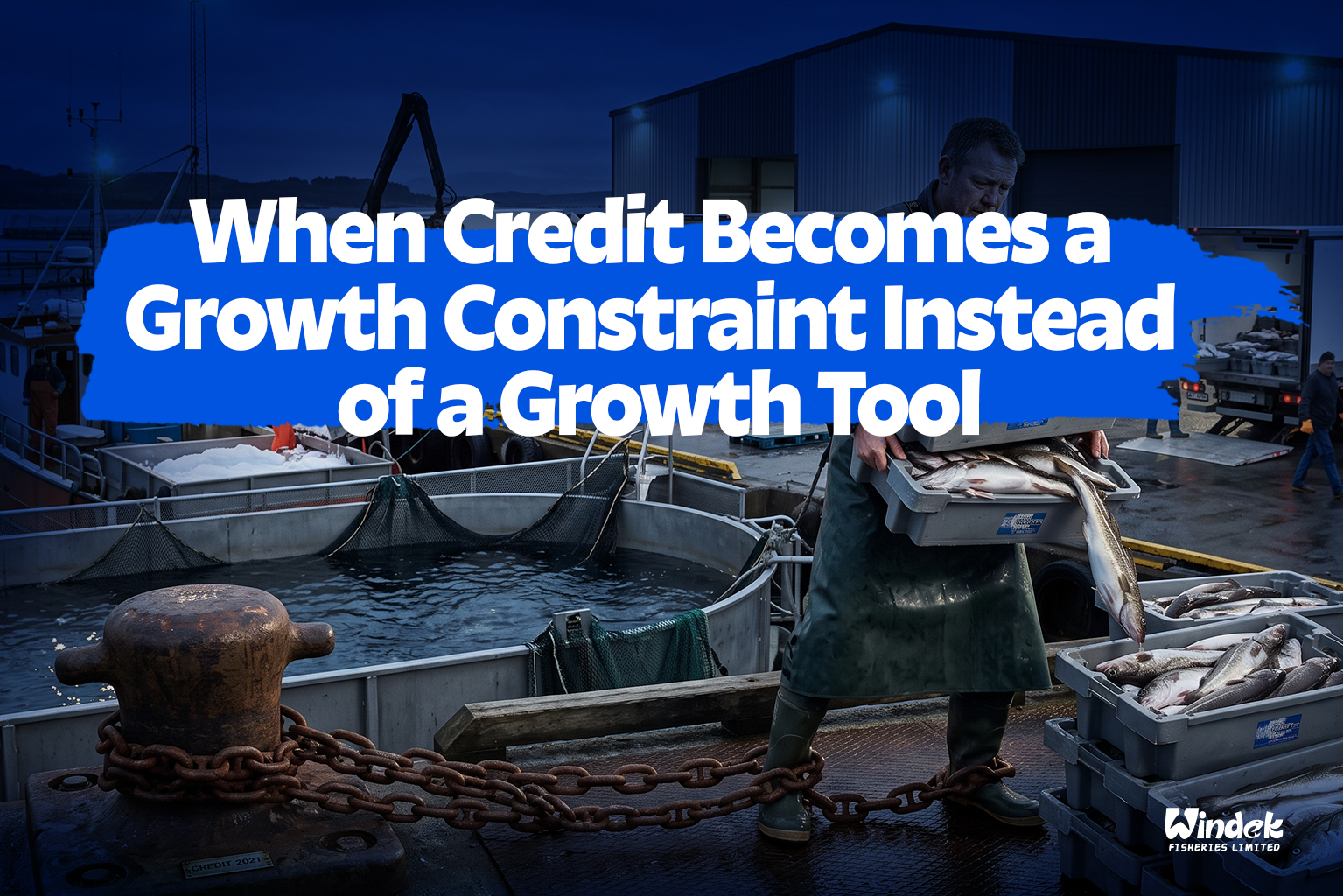
When Credit Becomes a Growth Constraint Instead of a Growth Tool
For many businesses, getting access to credit feels like reaching an important milestone.
It provides working capital.
It allows larger purchases.
It supports day-to-day operations.
In the early stages of a business, credit often acts as a powerful growth accelerator.
But as businesses expand, something unexpected can happen.
The same credit structure that once supported growth can quietly begin to limit it.
This transition often goes unnoticed until growth starts to slow.

Every business evolves.
As sales increase, so do operational demands.
More inventory is needed.
Larger customer orders must be fulfilled.
Supplier commitments become more significant.
Cash flow becomes more complex.
Yet many businesses continue operating with the same financing structure they established years earlier.
While the business has grown, its credit capacity has not.
This creates a gap between operational demand and financial capability.
The Warning Signs
Businesses rarely recognize the problem immediately.
Sales continue to increase, making everything appear healthy.
However, beneath the surface, common warning signs begin to emerge.
1. Larger Orders Become Difficult to Finance
Opportunities exist, but available working capital cannot support them.
2. Inventory Decisions Become More Conservative
Instead of purchasing based on market opportunity, businesses buy only what existing cash allows.
3. Growth Creates More Financial Pressure
Higher revenue does not automatically improve liquidity.
Additional sales often require additional financing.
4. Cash Flow Feels Tighter Than Ever
Ironically, many growing businesses experience greater cash flow pressure than they did when they were smaller.
Why This Happens
Growth increases complexity.
Businesses must finance:
-
Larger inventory levels
-
Longer operating cycles
-
More customers
-
Higher logistics costs
-
Increased working capital requirements
If financing does not expand alongside operations, growth eventually reaches a ceiling.
The issue is not poor sales.
It is insufficient financial capacity.
Why This Matters in Fish Trading
The seafood industry is particularly sensitive to working capital.
Inventory moves quickly.
Market prices fluctuate.
Buying opportunities can disappear within days.
Businesses that cannot scale their financing often struggle to respond when market conditions become favourable.
Timing is everything.
Without sufficient financial flexibility, profitable opportunities may be lost.
How Successful Businesses Avoid This Trap
High-performing businesses review their financing strategy as frequently as they review their sales performance.
They ask questions such as:
-
Does our current credit structure support our growth plans?
-
Can we finance larger inventory purchases?
-
Are repayment terms aligned with our sales cycle?
-
Do we have enough working capital to respond to unexpected opportunities?
These questions help ensure that financing grows alongside operations.
Credit Should Support Growth, Not Restrict It
Credit should never be viewed as a one-time solution.
It should evolve with the business.
Organizations such as the International Finance Corporation consistently emphasize that access to appropriate and scalable financing is essential for business expansion and supply chain resilience.
The businesses that continue growing are often those that regularly adapt their financial structure to match operational growth.
Conclusion
Business growth creates new opportunities.
But it also creates new financial demands.
The challenge is not simply obtaining credit.
The challenge is ensuring that your financing evolves as your business evolves.
Because eventually, every growing business reaches a point where yesterday’s credit structure is no longer enough for tomorrow’s opportunities.
The businesses that recognize this early position themselves for sustainable, long-term growth.

Leave A Comment