
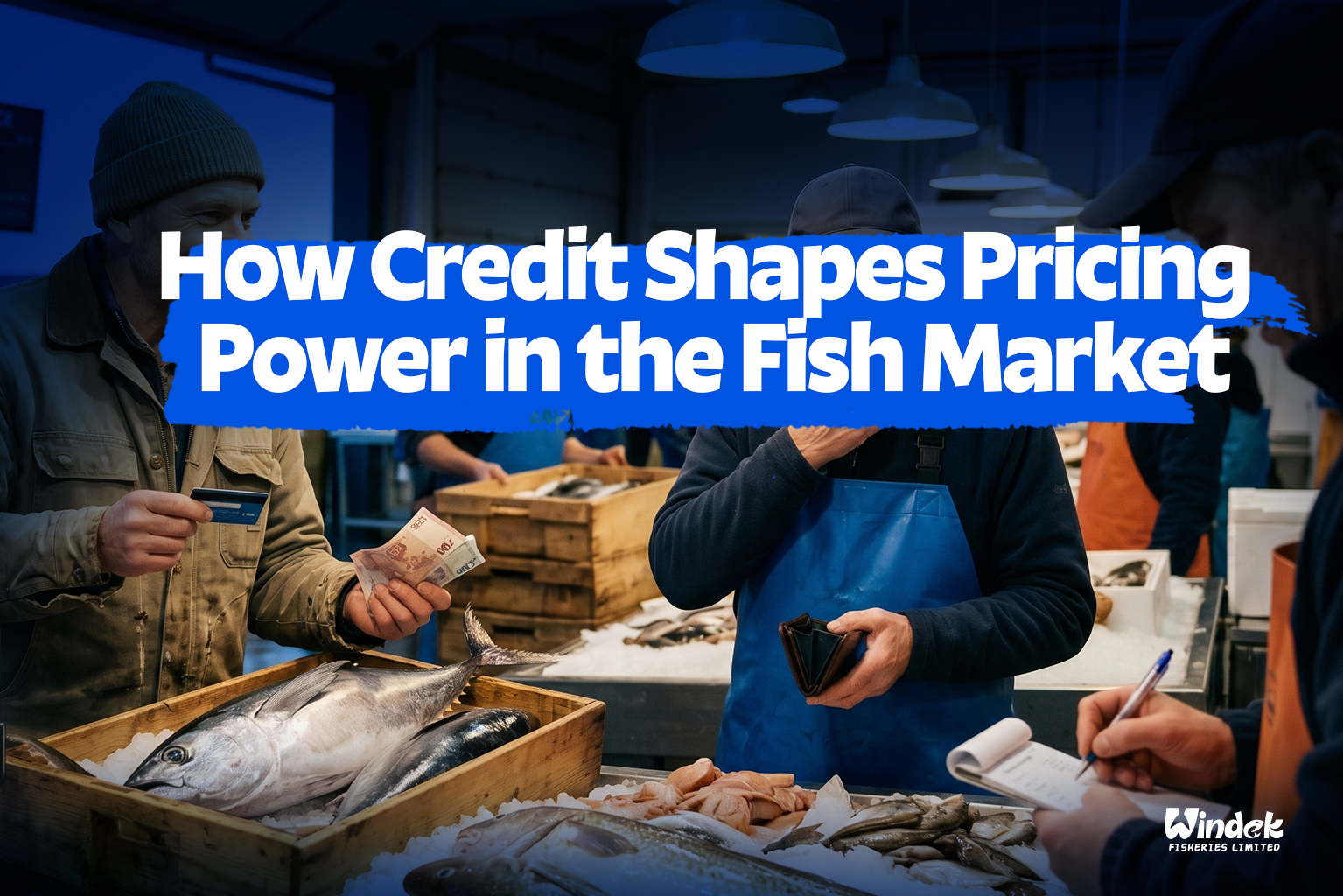
How Credit Shapes Pricing Power in the Fish Market
Most people believe pricing power comes from one thing:
Buying in large volumes.
And while volume certainly helps, it is not the only factor that determines who gets the best prices in the fish market.
Often, the real advantage comes from something less obvious:
Access to credit.
The ability to act quickly when opportunities appear can have a significant impact on profitability.
In many cases, credit provides that advantage.
Understanding Pricing Power
Pricing power is the ability to purchase stock at favourable prices and maintain healthy margins when selling.
Many traders assume pricing power comes from:
-
Business size
-
Purchasing volume
-
Supplier relationships
While these factors matter, they often depend on one critical capability:
The ability to buy when market conditions are favourable.


Why Timing Matters in Fish Trading
Nigeria’s seafood market is highly dynamic.
Prices can change due to:
-
Supply fluctuations
-
Import schedules
-
Exchange rate movements
-
Seasonal demand
When prices temporarily drop, buyers have a window of opportunity.
The challenge is that opportunities rarely wait for cash to become available.
The Advantage of Credit
Credit gives businesses flexibility.
Instead of waiting for cash to accumulate, businesses can:
-
Secure inventory immediately
-
Lock in favourable pricing
-
Increase purchasing capacity
-
Position ahead of future demand
This flexibility often translates directly into stronger margins.
A Practical Example
Imagine two fish traders.
Both recognize that market prices have fallen.
Both expect prices to increase within the next few weeks.
The first trader has access to structured credit.
The second trader must wait until sufficient cash is available.
The first trader buys immediately.
The second trader waits.
When prices rise, the difference becomes clear.
Both saw the same opportunity.
Only one was positioned to act.
Credit Creates Negotiating Power
Suppliers value certainty.
Buyers who can commit quickly often have greater leverage during negotiations.
Credit helps businesses:
-
Respond faster to supply opportunities
-
Purchase larger quantities when needed
-
Secure stock before competitors
-
Reduce delays in decision-making
This can strengthen negotiating positions and improve overall purchasing outcomes.
The Importance of Structured Credit
Not all credit creates value.
Poorly managed credit can increase pressure and reduce profitability.
The key is structure.
Effective credit should align with:
-
Inventory turnover
-
Sales cycles
-
Cash flow patterns
When properly managed, credit becomes a growth tool rather than a financial burden.
Why This Matters for Nigeria’s Seafood Industry
The seafood industry operates on timing.
Businesses that can move quickly often gain advantages that are unavailable to slower competitors.
Organizations such as the International Finance Corporation have highlighted the importance of access to finance in improving supply chain efficiency and business growth.
In practical terms, access to credit often determines whether businesses can capitalize on market opportunities when they appear.
Conclusion
Pricing power is not simply about having more money.
It is about having the flexibility to act when opportunities arise.
Credit does not just help businesses buy stock.
It helps them buy at the right time.
And in fish trading, timing often determines profitability.
Internal Links
-
Services: https://windekfisheries.com/services/
-
Products: https://windekfisheries.com/products/
External References
-
International Finance Corporation – https://www.ifc.org
-
Food and Agriculture Organization of the United Nations – https://www.fao.org

Leave A Comment