
In Nigeria’s seafood market, demand is not the problem. Movement is.
Fish continues to sell across markets every day, yet supply chains often slow down, break, or become inconsistent. The reason is rarely a lack of buyers. It is usually a lack of structure.
One of the most overlooked factors behind this instability is how credit is used.

The Reality of Seafood Trading in Nigeria
Nigeria consumes millions of metric tons of fish annually, with demand consistently outpacing local supply. This creates a fast-moving, opportunity-rich market.
However, most transactions still rely heavily on cash-only trading or informal credit.
This creates a bottleneck.
Buyers often have demand but lack immediate liquidity. Suppliers have inventory but need quick payment. The result is slower movement across the chain.
Why Cash-Only Systems Fall Short
Cash transactions reduce immediate risk, but they introduce operational inefficiencies:
-
Buyers purchase below actual demand
-
Suppliers hold inventory longer than necessary
-
Supply becomes inconsistent across markets
Even in a high-demand environment, the market begins to move slower than it should.
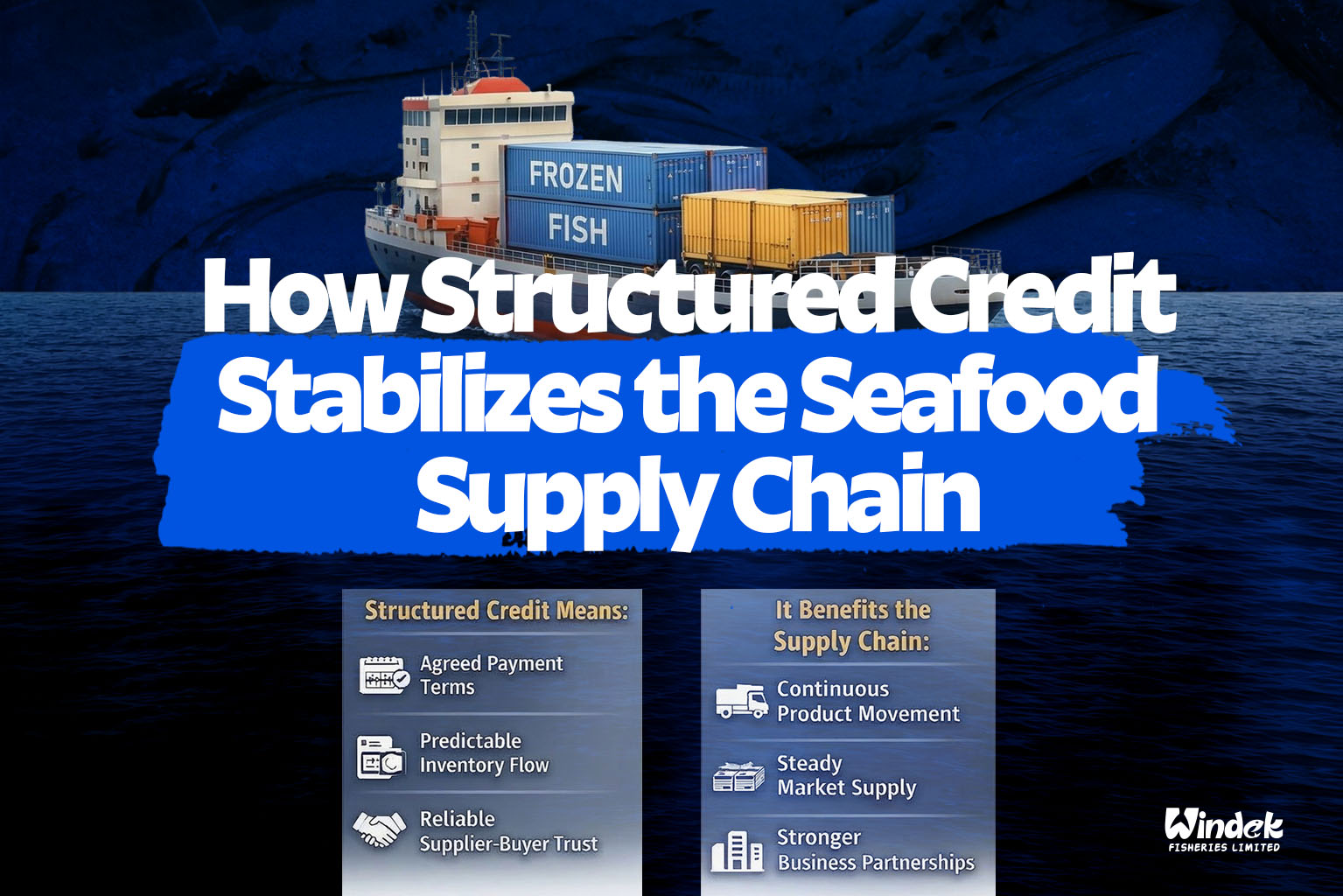
What Structured Credit Really Means
Structured credit is not about giving out goods without control. It is about building a system that supports predictable trade.
It typically includes:
-
Defined payment timelines
-
Agreed volume commitments
-
Clear inventory tracking
-
Transparent communication between parties
This replaces uncertainty with clarity.
How Structured Credit Stabilizes the Supply Chain
When properly implemented, structured credit improves the entire ecosystem.
1. It Aligns Cash Flow With Sales Cycles
Fish does not always sell instantly. Structured credit allows buyers to sell inventory before completing full payment, reducing pressure and improving turnover.
2. It Increases Market Liquidity
Buyers can access more stock, and suppliers can move more volume. This keeps markets active and responsive.
3. It Reduces Supply Disruptions
With predictable payment and delivery cycles, both sides can plan better, reducing delays and shortages.
4. It Builds Long-Term Trust
Transparency and structure reduce disputes, making relationships more sustainable.
Supporting Industry Insight
-
According to the Food and Agriculture Organization (FAO), Nigeria’s fish demand significantly exceeds domestic production, driving continuous market activity.
-
The Central Bank of Nigeria (CBN) highlights limited access to structured financing as a key constraint for agribusiness growth.
-
The International Finance Corporation (IFC) estimates that over 60% of SMEs in emerging markets lack access to formal credit, relying on informal systems instead.
These gaps directly affect how efficiently supply chains operate.
The Windek Fisheries Approach
At Windek Fisheries, we have learned that stable supply chains are built on systems, not assumptions.
Our approach to credit focuses on:
-
Payment schedules aligned with real sales cycles
-
Visibility into inventory movement
-
Strong cold-chain discipline to protect product value
This allows us to move volume responsibly while reducing risk for both suppliers and buyers.
What This Means for Buyers and Suppliers
For buyers, structured credit provides flexibility to scale without being limited by immediate cash.
For suppliers, it ensures more consistent demand and faster inventory turnover.
For the market, it creates stability.
Conclusion
Nigeria’s seafood industry is not limited by demand. It is limited by how well supply chains are structured.
Structured credit is not just a financial tool. It is infrastructure.
When properly implemented, it keeps products moving, reduces risk, and allows the market to grow sustainably.

Leave A Comment