- We are Open Mon - Fri 9:00am -17:00pm
- e-mail us info@windekfisheries.com
- Our Address 19 Redemption way, Trans Amadi Port-Harcourt


What Really Determines Fish Prices in Nigeria Beyond Supply and Demand
- windekfisheries
- No Comments
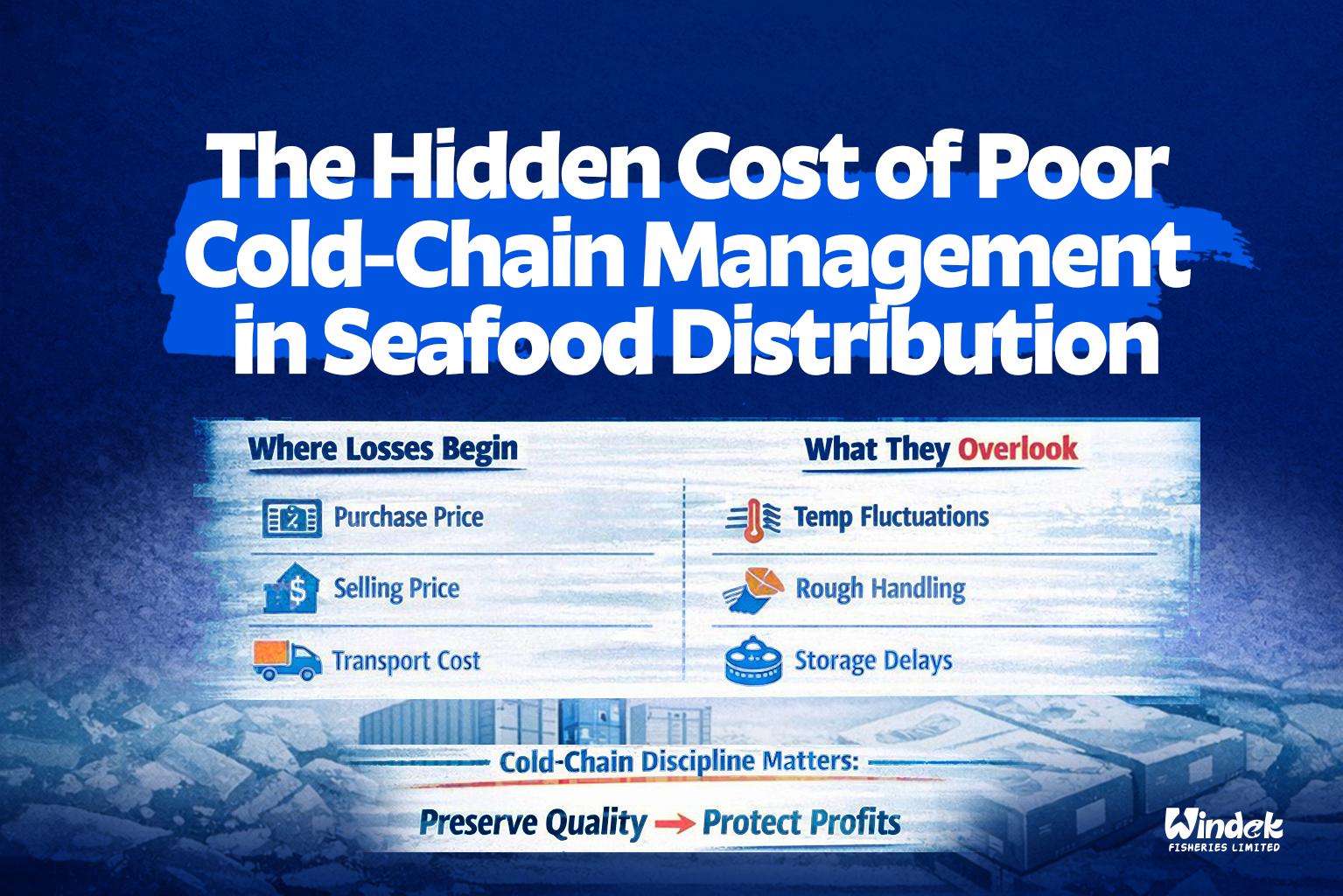
Many people assume that fish prices in Nigeria are driven purely by supply and demand. More supply should reduce prices. Higher demand should increase them. But anyone actively involved in Nigeria’s seafood market knows it is not that simple. Frozen fish prices often change even when supply appears stable and demand has not shifted significantly. As we’ve seen across the broader seafood ecosystem, including how Food and Agriculture Organization of the United Nations tracks food systems globally (https://www.fao.org), pricing is influenced by deeper structural factors. Understanding these factors helps buyers, distributors, and suppliers make better decisions and protect their margins. 1. Exchange Rate Volatility Nigeria depends heavily on imported frozen fish to meet local demand. This makes pricing highly sensitive to exchange rate movement. When the naira weakens against the dollar: Import costs increase Landing costs rise Wholesale prices adjust Even when global fish prices remain stable, local prices can increase due to currency pressure alone. Reports from the Central Bank of Nigeria (https://www.cbn.gov.ng) consistently show how exchange rate fluctuations impact food and import-dependent industries. For businesses involved in frozen seafood supply, monitoring FX trends is essential. This is why structured sourcing and planning play a key role in stabilizing operations, as explained on our Home page:https://windekfisheries.com/ 2. Import Timing and Shipment Cycles Fish does not enter Nigeria at a constant rate. It arrives in shipments. This creates periods of temporary supply changes: Multiple shipments arriving together may soften prices Delays or reduced shipments may tighten supply So pricing is influenced not just by total supply, but by timing. Smart buyers track shipment cycles instead of relying only on current availability. Insights from BusinessDay Nigeria (https://businessday.ng) also highlight how import timing and supply disruptions affect commodity pricing across Nigeria. 3. Logistics and Port Costs After fish arrives in Nigeria, several cost layers influence final pricing: Port storage and demurrage Clearing delays Transportation fuel costs Cold storage handling Every additional day at port increases cost. These logistics-related pressures are a major part of seafood supply chain challenges in Nigeria. Efficient handling and distribution systems help reduce these risks. You can explore how structured operations support this on our Services page:https://windekfisheries.com/services/ 4. Cold-Chain Handling and Product Quality Not all frozen fish in the market maintains the same quality. Proper cold-chain management preserves: Texture Weight Shelf life Poor handling leads to: Spoilage Discounting Reduced resale value This creates price variation within the same market. Businesses with strong cold-chain discipline maintain better pricing consistency and product value. You can view examples of well-maintained inventory on our Products page:https://windekfisheries.com/products/ 5. Buyer Behavior and Market Psychology One of the most overlooked factors in pricing is buyer behavior. When many buyers enter the market at the same time: Prices rise quickly When buyers hold back: Prices stabilize or drop This shows that pricing is influenced not just by supply, but by decision patterns across the market. In many cases, perception and timing drive short-term price movement just as much as actual supply levels. The Bigger Picture Fish pricing in Nigeria is not controlled by a single factor. It is influenced by: Exchange rate movement Shipment timing Logistics and port efficiency Cold-chain discipline Buyer behavior Supply and demand still matter, but they are only part of the equation. How Smart Buyers Respond Experienced buyers do not simply react to price changes. They: ✔ Monitor exchange rate trends✔ Track shipment and import cycles✔ Plan purchases ahead of demand spikes✔ Work with reliable supply and cold-chain partners Understanding the drivers behind pricing creates a significant advantage in the market. Conclusion The question is not just: “What is the price today?” The better question is: “What is driving the price right now?” That shift in thinking is what separates reactive buyers from strategic ones. In Nigeria’s seafood market, understanding the system behind pricing is what protects long-term profitability.